Soup Philosophy
Soup Philosophy
For about a year I worked as a cook in a café. Soup Of The Day was on the menu every day of the week, all seasons. The café was vegetarian but as a rule we tried to make the soup vegan and gluten free. I love working with vegetables so the rule didn’t feel restrictive. I came to enjoy the ritual of waking up the kitchen, unrolling my canvas knife carrier, putting on my apron and heading into the store room with a big bag to collect ingredients. It also turned out to be the most creative part of the job as the rest of the menu depended on set recipes, either cooked or assembled to order. The whole experience made me develop and refine my Soup Philosophy.
#sharpknife
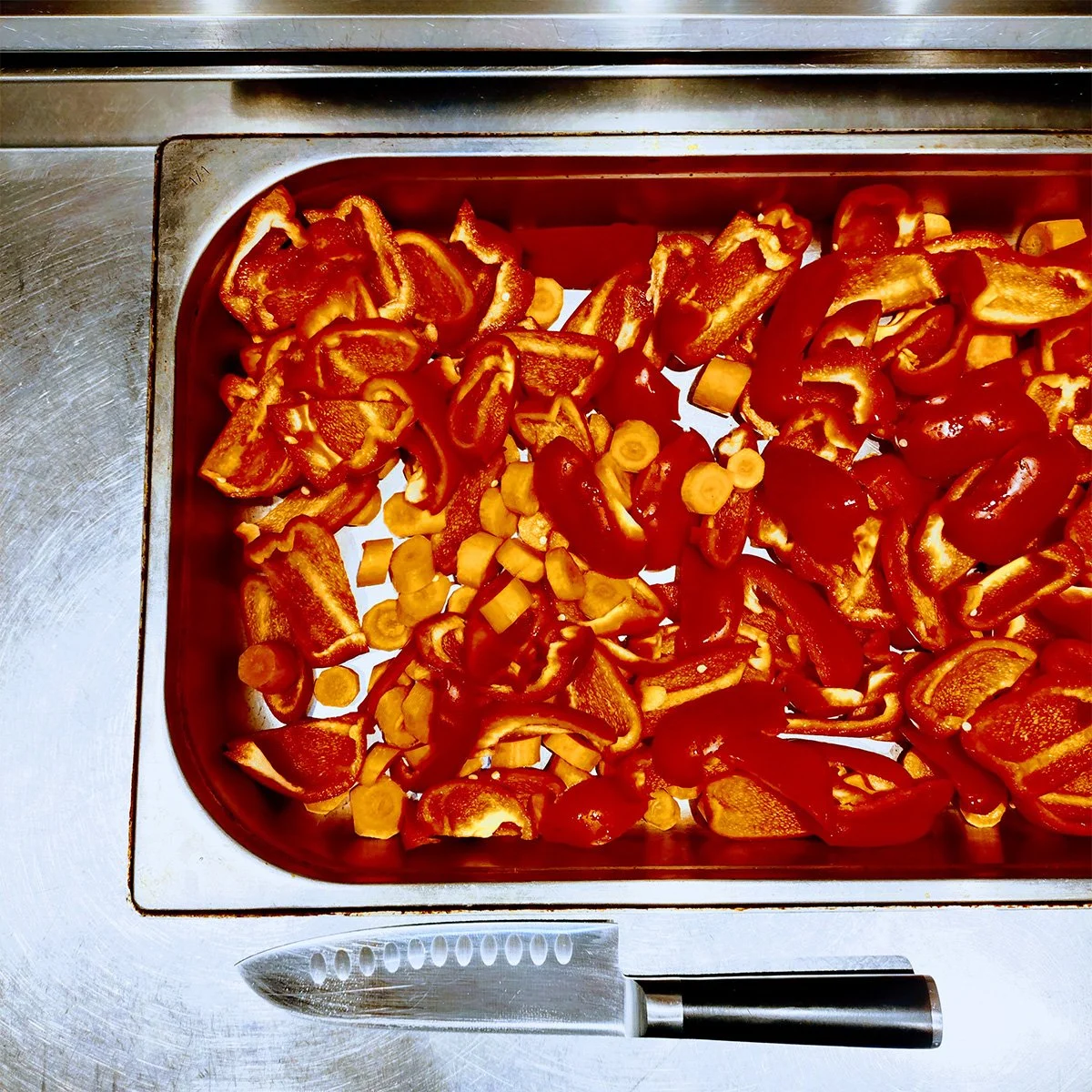
A sharp knife, good lighting and a kitchen that is easy to keep clean, especially unobstructed counter surfaces, is what I look for when I walk in. The lighting and the set-up is often not in one’s control but a sharp knife can be. I got in the habit of carrying my own. Like a proper chef. I once read about a chef that takes hers on holiday with her, even if she is staying in a hotel.
Start Low and Slow
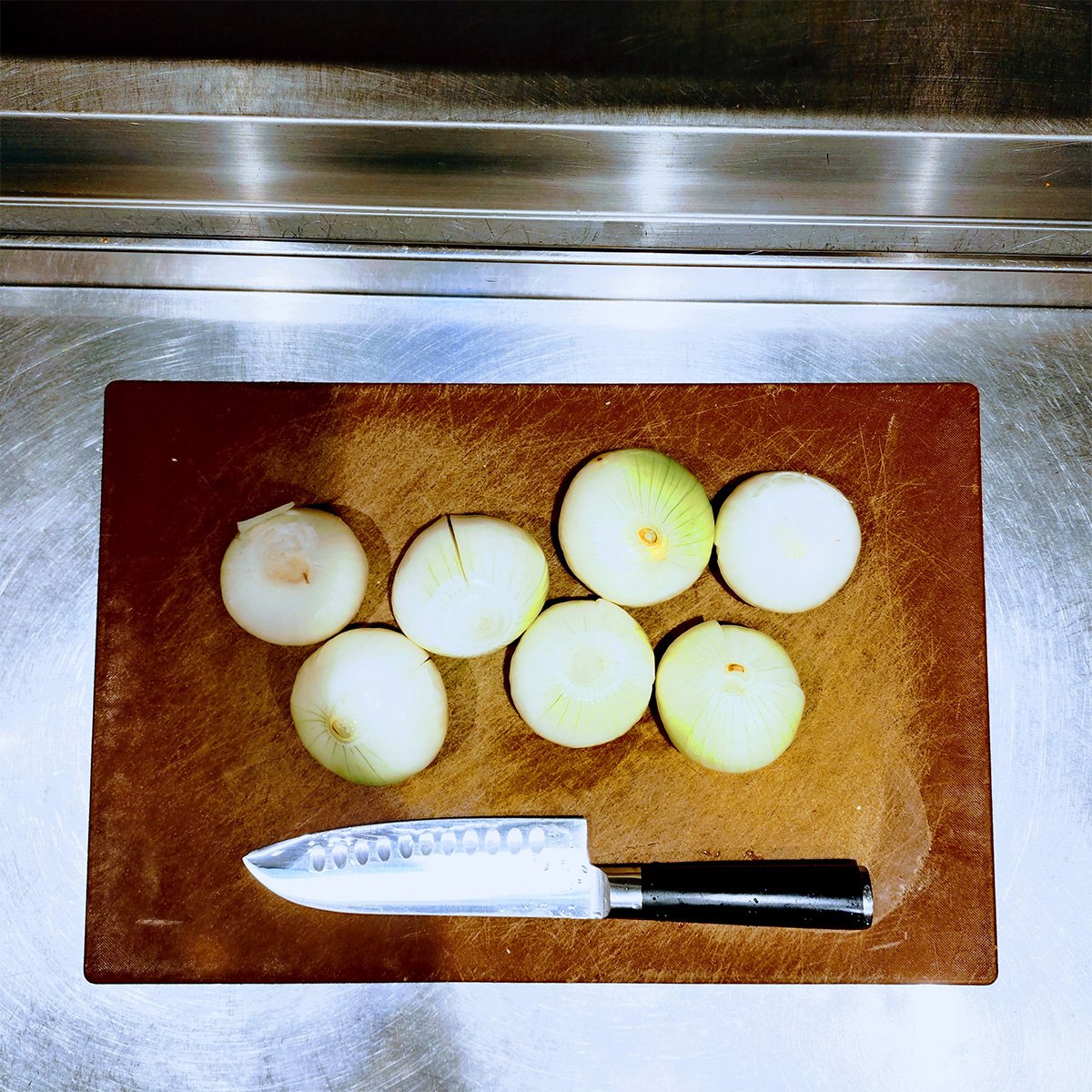
Hob on. Heavy pot. Olive oil. Important to warm the oil first and make sure that the bottom of the pot is coated. Having a little conversation with the oil first, then introducing the onions. After adding the onions and stirring them well to coat them well, the conversation with them takes about 45 minutes to an hour. Patience. (Think of patience as a soup ingredient.) Let the onions transform from crisp opaque white to soft translucent golden and reduce in bulk by two thirds. Add garlic after the transformation for about 15 minutes or so.
Tray Out, Veg In.
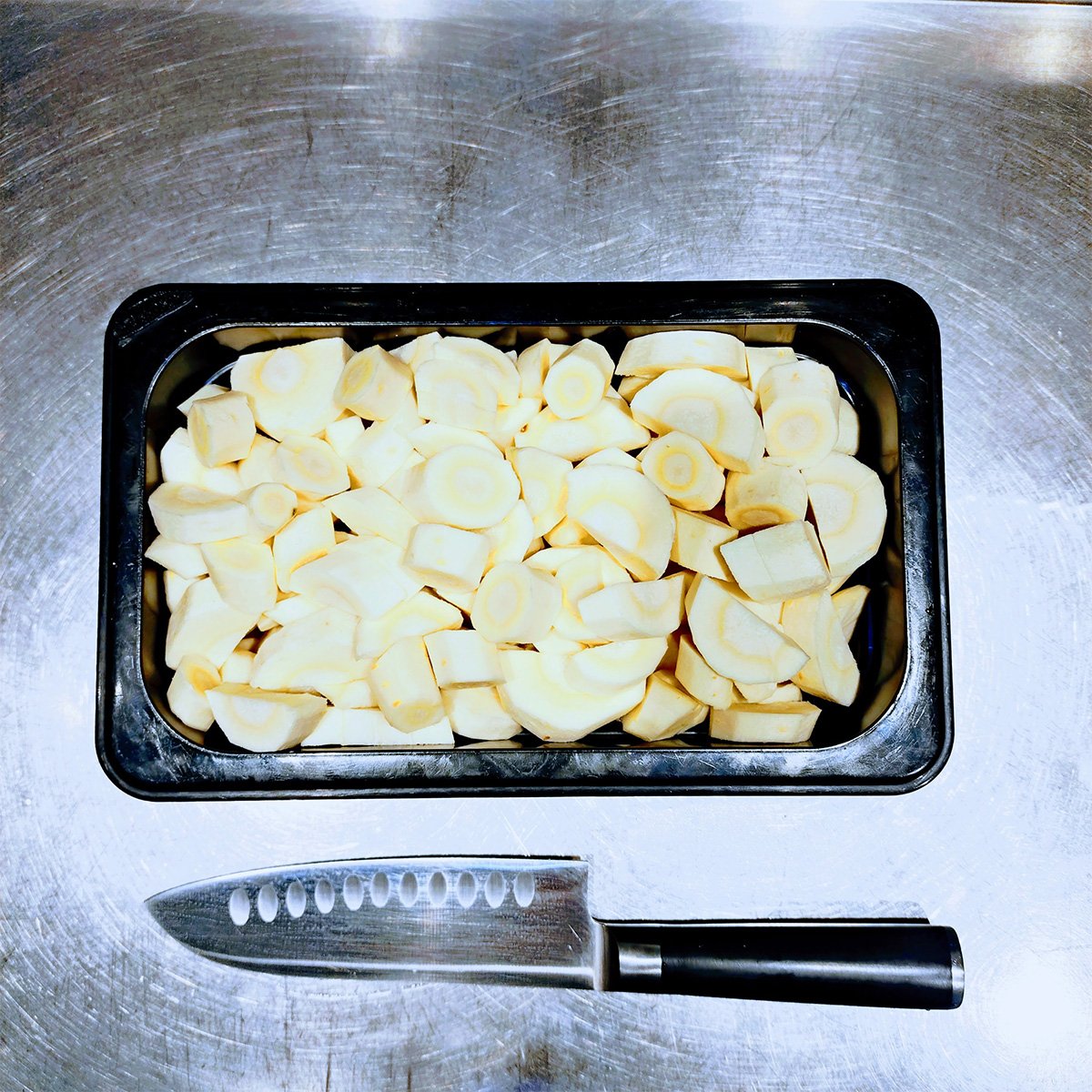
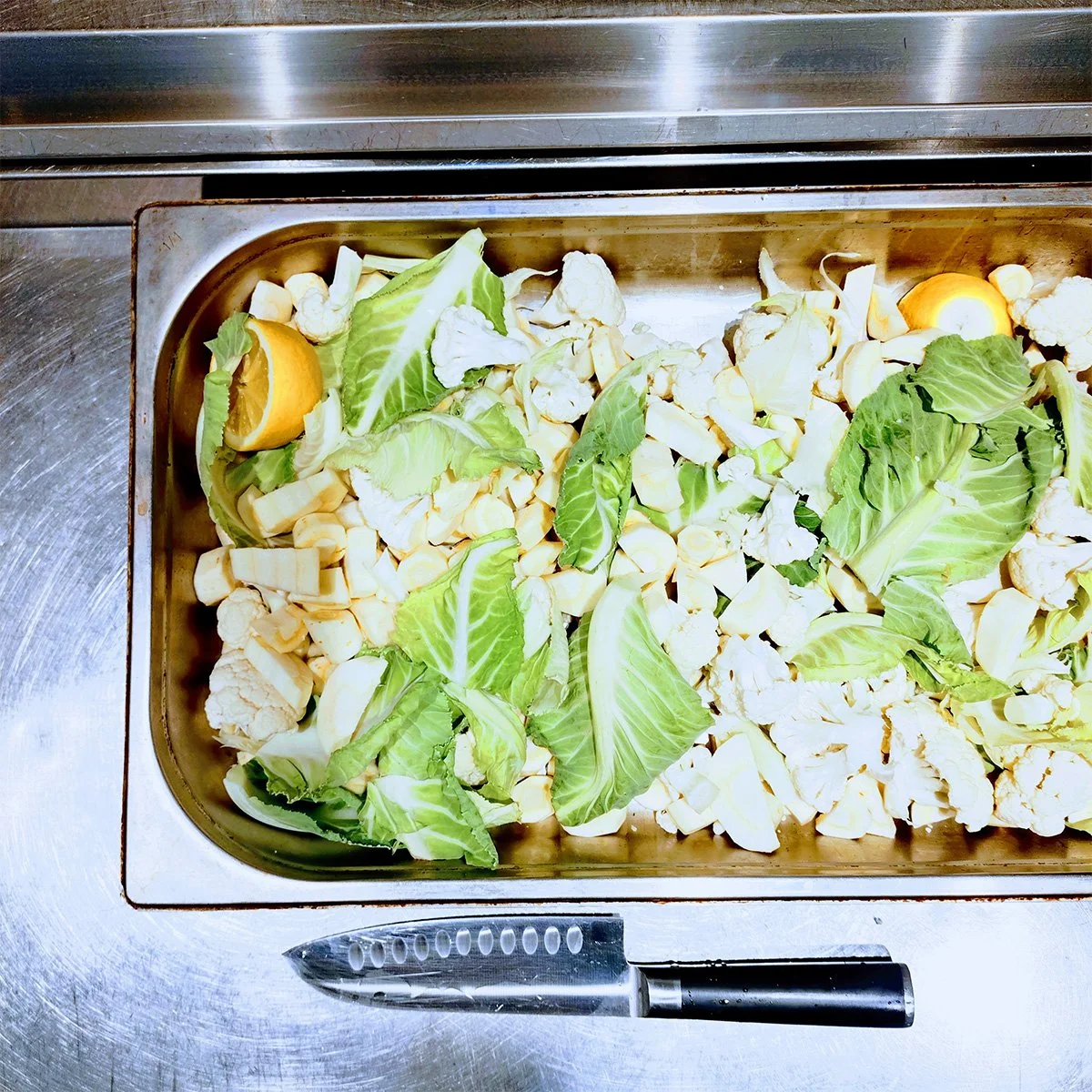
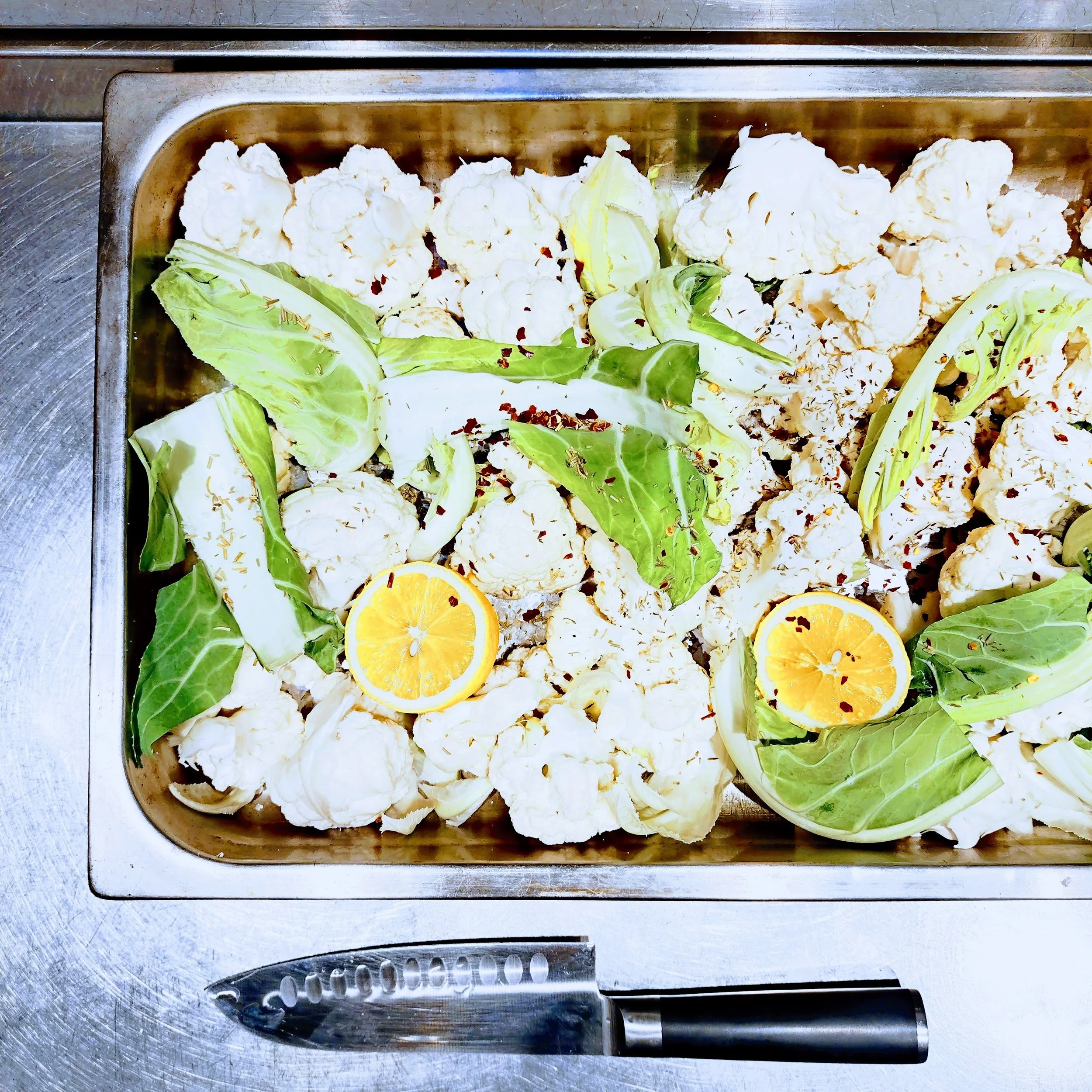
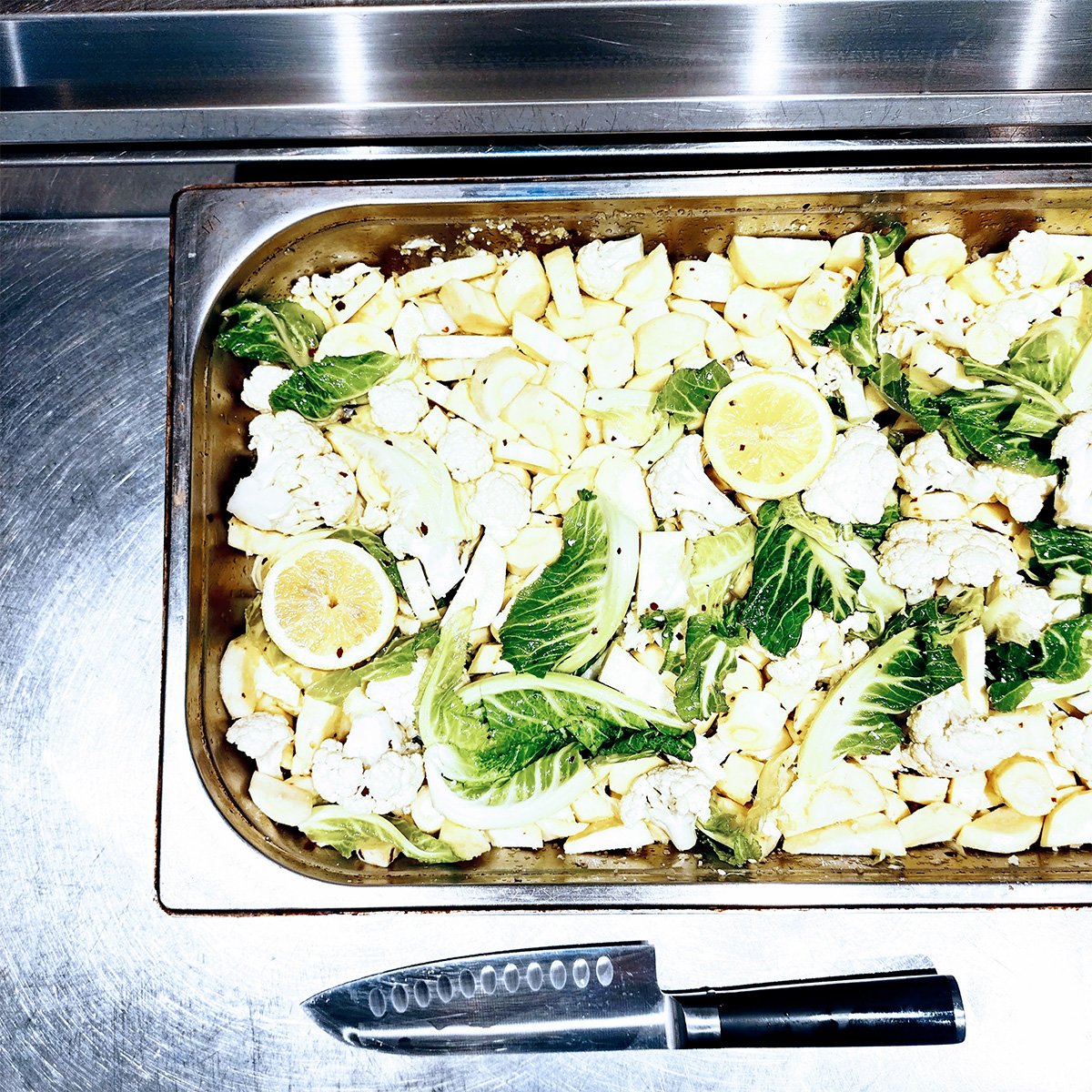
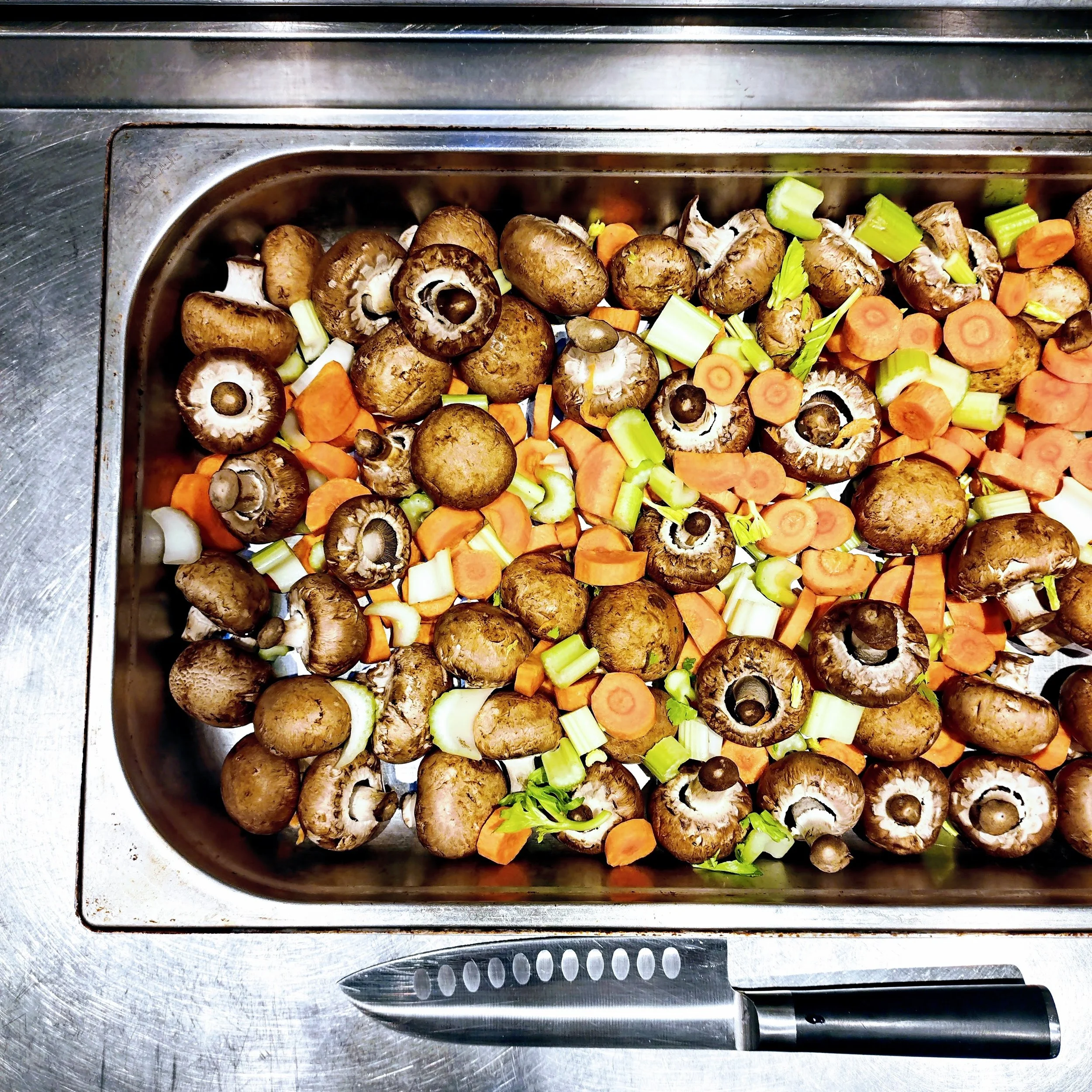
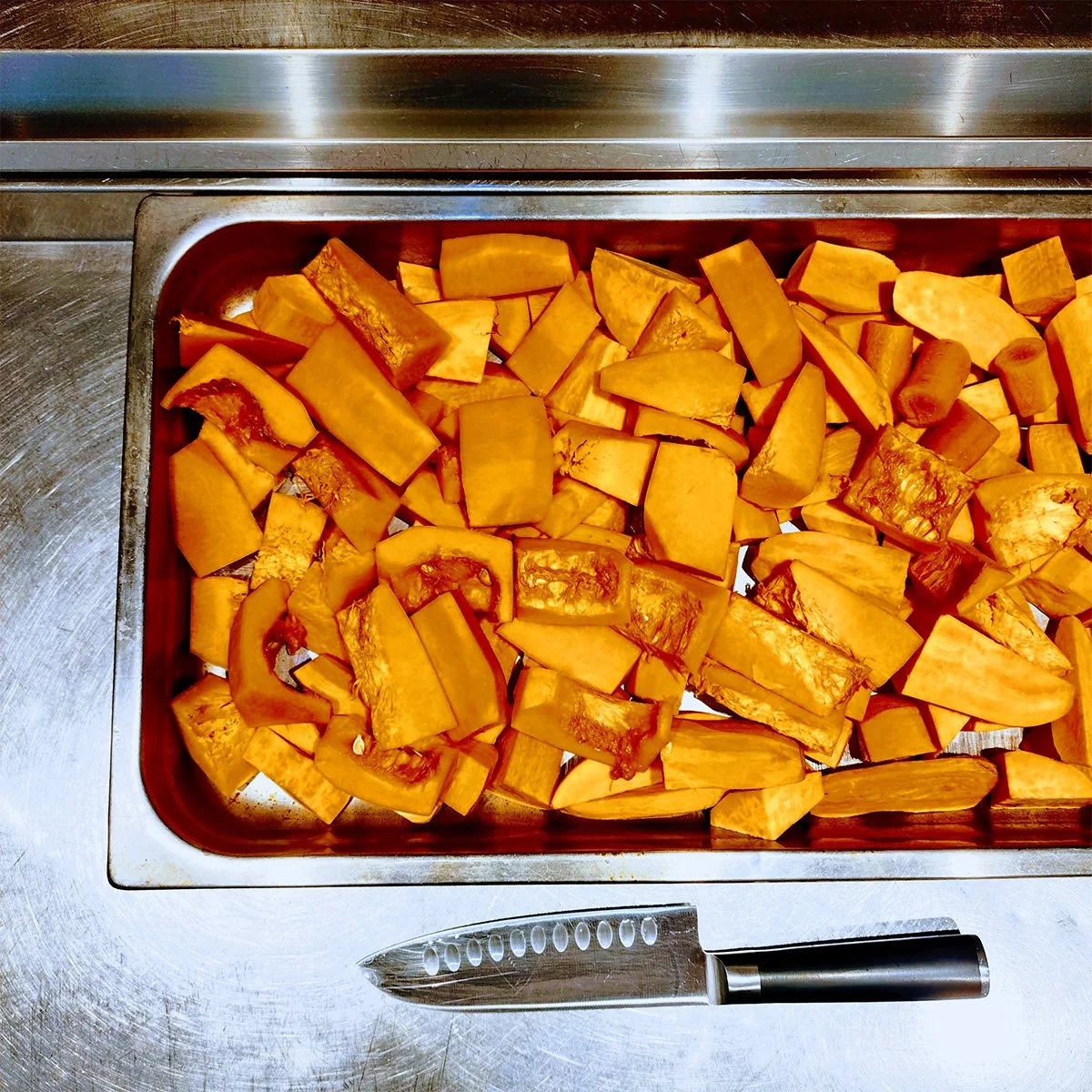
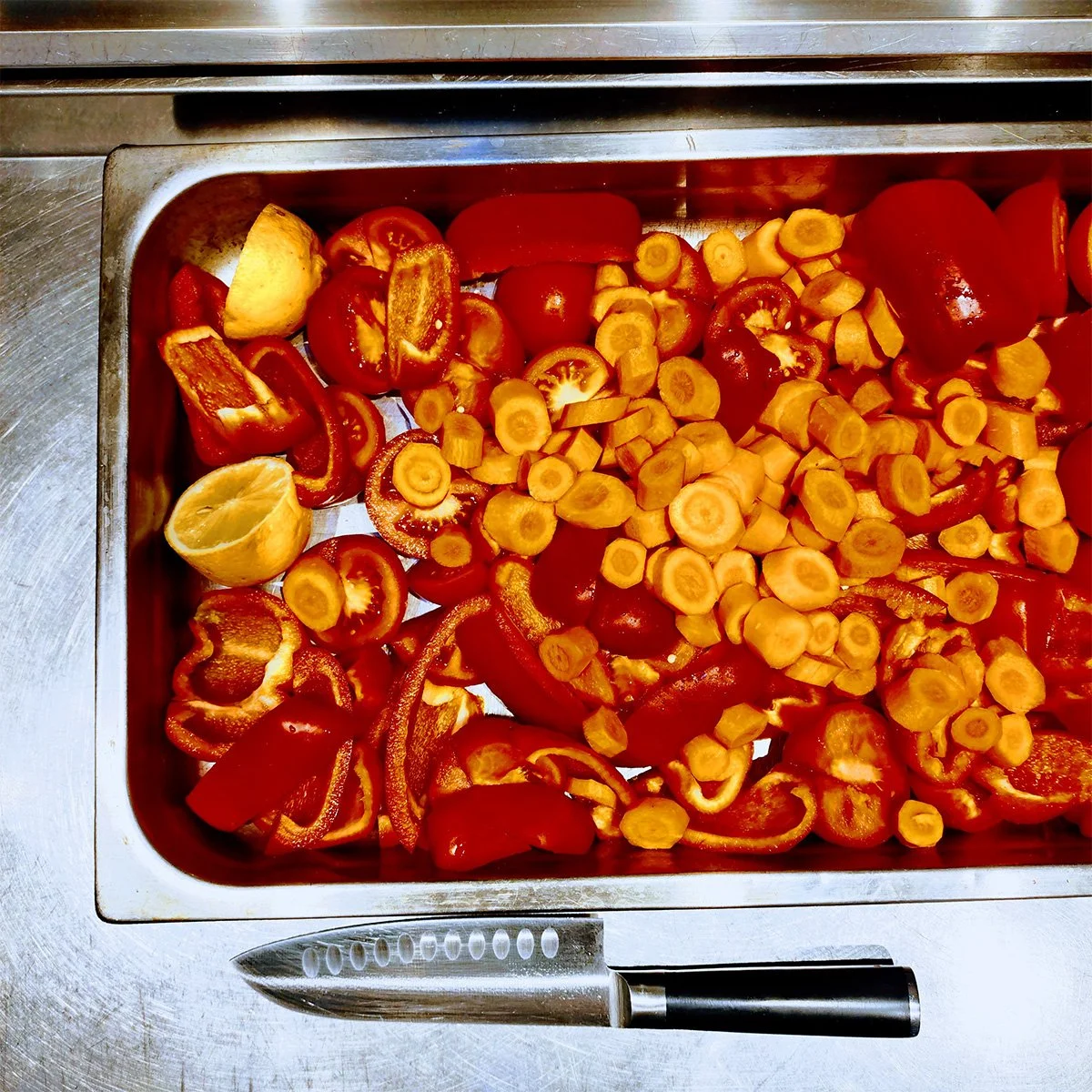
As the onions and garlic are disappearing it is the turn of the main the vegetables to become bright and vibrant against the blank canvas of the stainless steel roasting tray. And then amplified by a coating of olive oil. I’d often pause here for a quick style and a photo. Cook’s food porn rather than customer food porn. Cauliflower with paprika, butternut with chilli, red peppers and tomatoes, sweet potato in thick rough dice, mushrooms, squat little cylinders of carrot. Half an hour in a hot oven – 180/200 degrees Celsius – literally give the vegetables the edge. A little brown edge with lots of flavour.
No Stock, No Tins.
Use this instead: Olive Oil, Sea Salt, Fresh Roasted Lemons.
I became adamant about not using stock in my soup. I don’t like it in terms of flavour – harsh and ‘flat’. I don’t like it for what it contains – mostly salt, starch, protein and oil. And I don’t like it for what it is - a highly processed product. I wanted the fresh soup to be fresh and taste fresh.
Occasionally I’d add dried herbs like rosemary or thyme, or paprika and chilli.
What I came to rely on though – my secret ingredient – was fresh lemons roasted with the main vegetables. Then scoop out the flesh. (It is possible to eat/use the peel as well.) And often I’d adjust the taste with freshly squeezed lemon juice.
Finish With A Rough Blend
Once all was in the pot on the hob with kettles of boiling water added, in goes the stick blender. I’d intentionally leave some texture in the soup so that you can make out the ingredients rather than go for a uniform smooth puree. Which can veer into the territory of goop, eerie. Taste and Season. Taste again. It is at this point that I would add most of the salt. I like getting my hand into a jar of sea salt crystals and measuring out by the finger full.
Serve With
I’d say either a bit of fresh chopped parsley or a swirl of pumpkin seed oil. Both if that looks good.
A slice of sourdough (not sourfaux) with a chunk of cold butter. Or oatcakes, because you are in Scotland or because you are keeping it gluten free.
That is the soup. Not complicated. What the season provides, what the store room holds, what patience and a sharp knife make possible.