Draad I
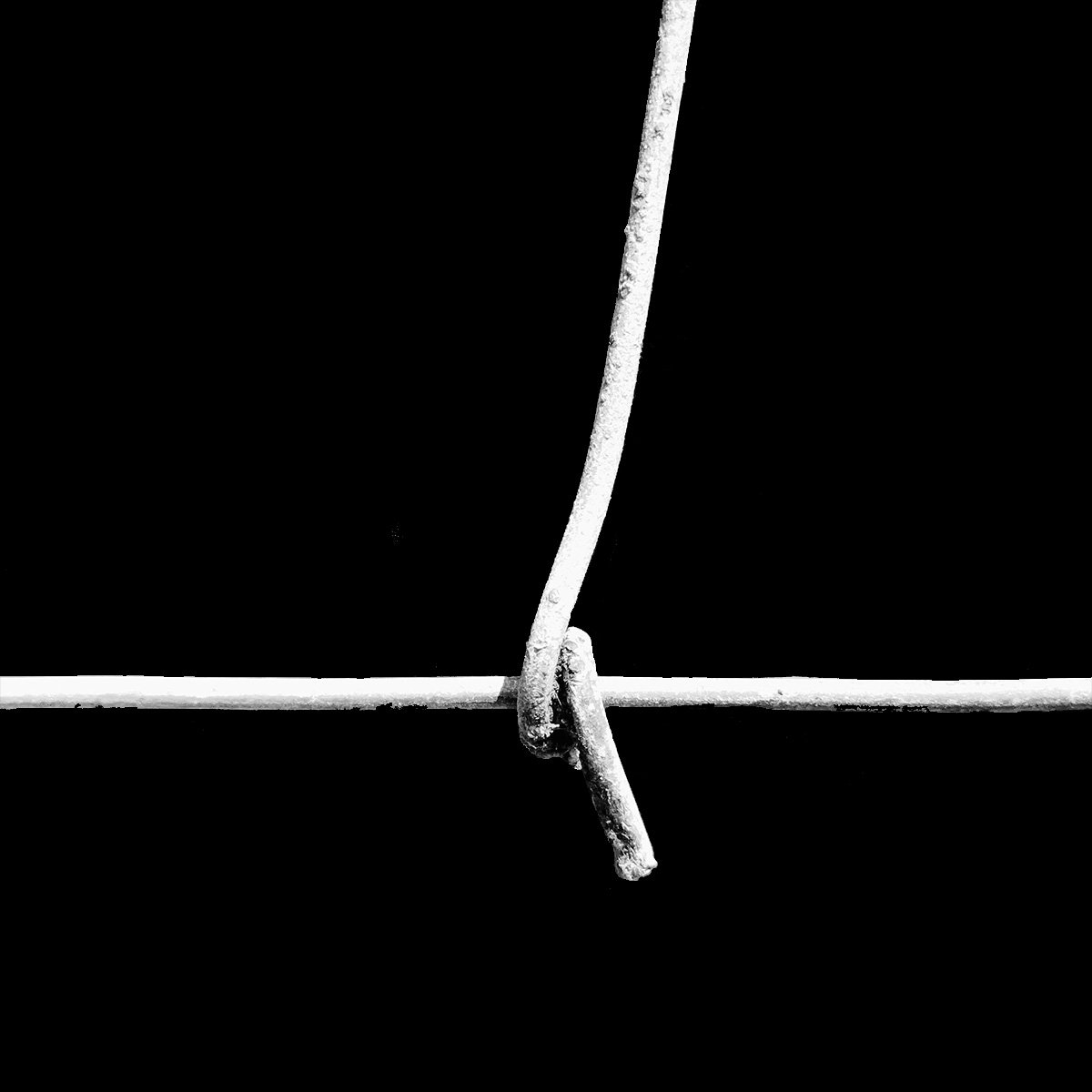
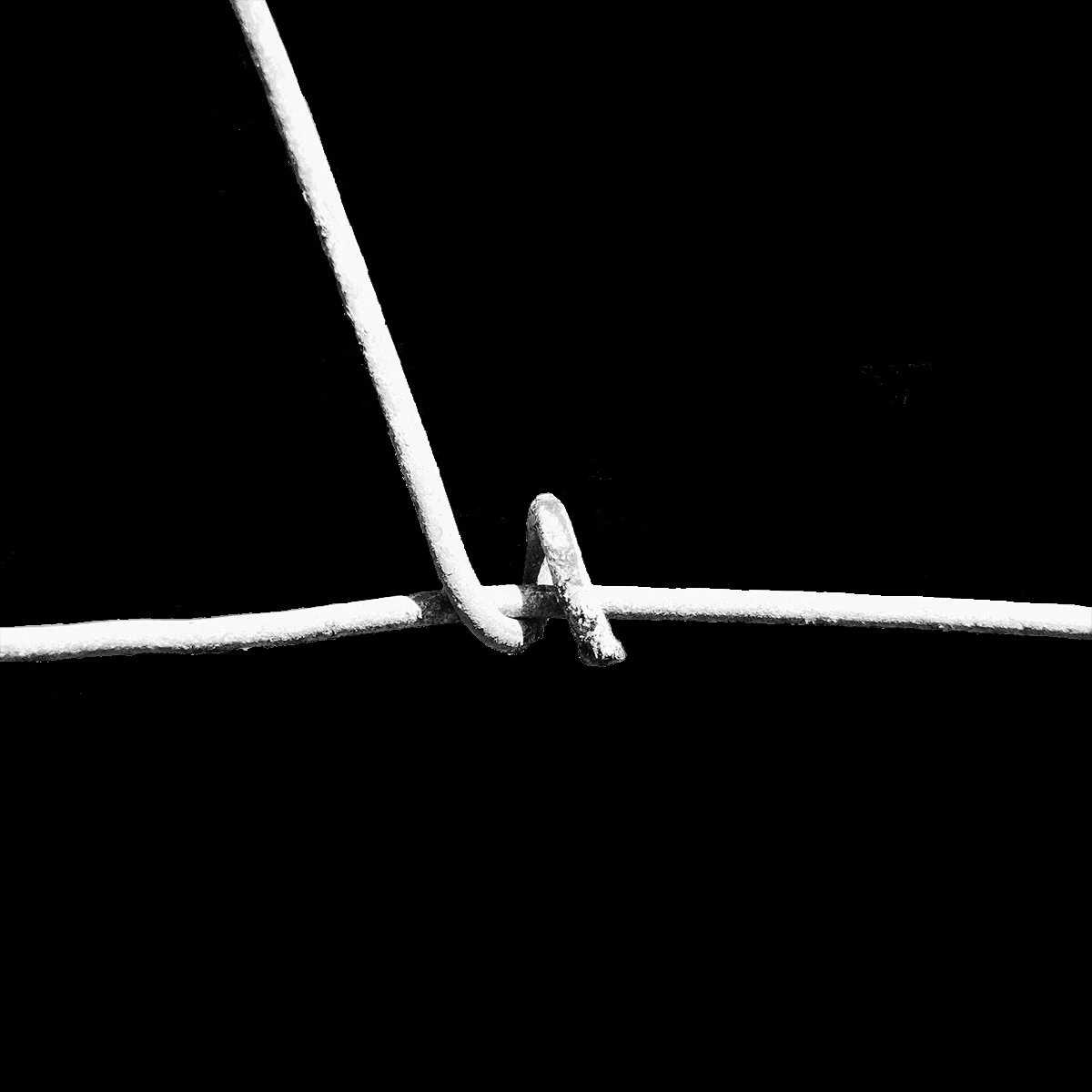
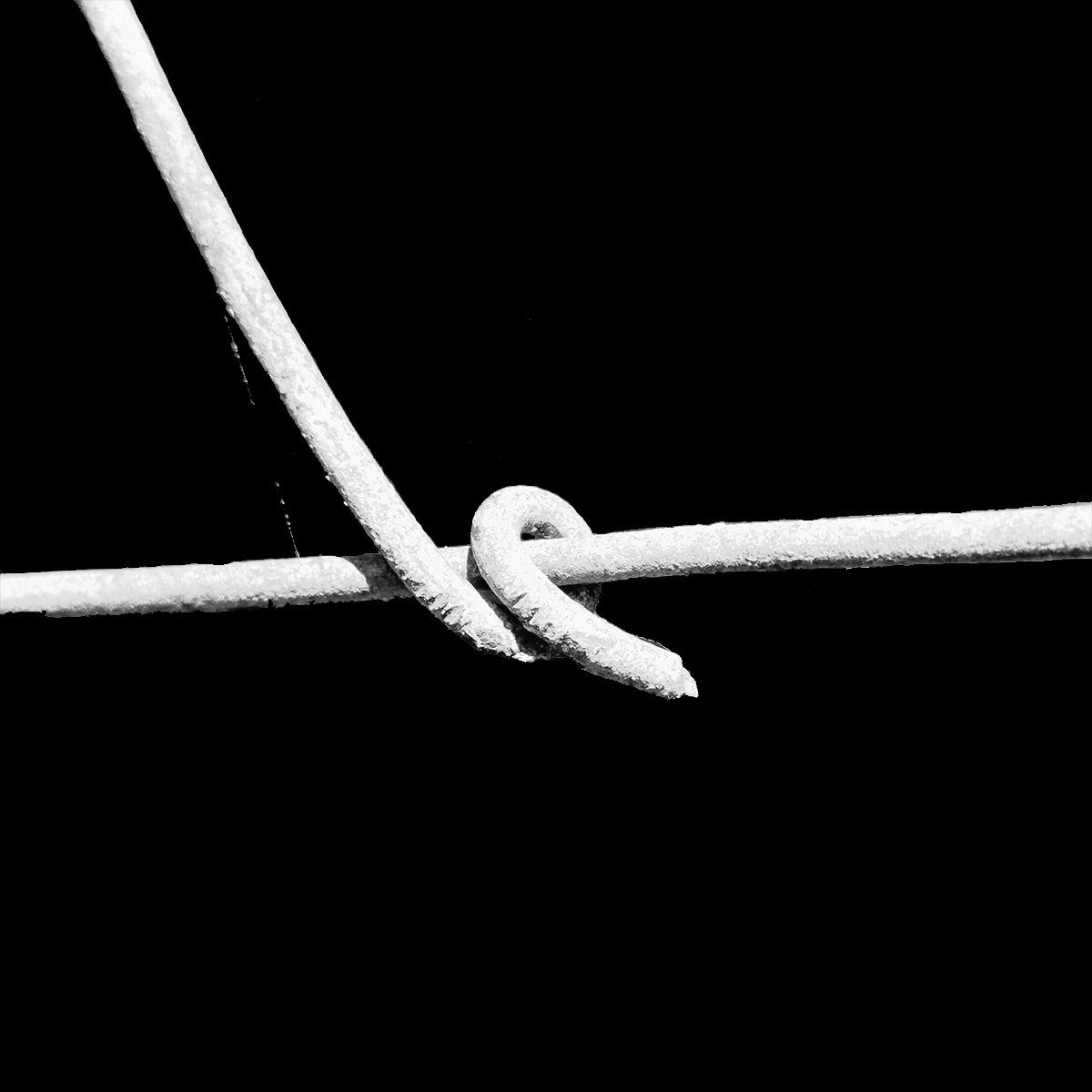
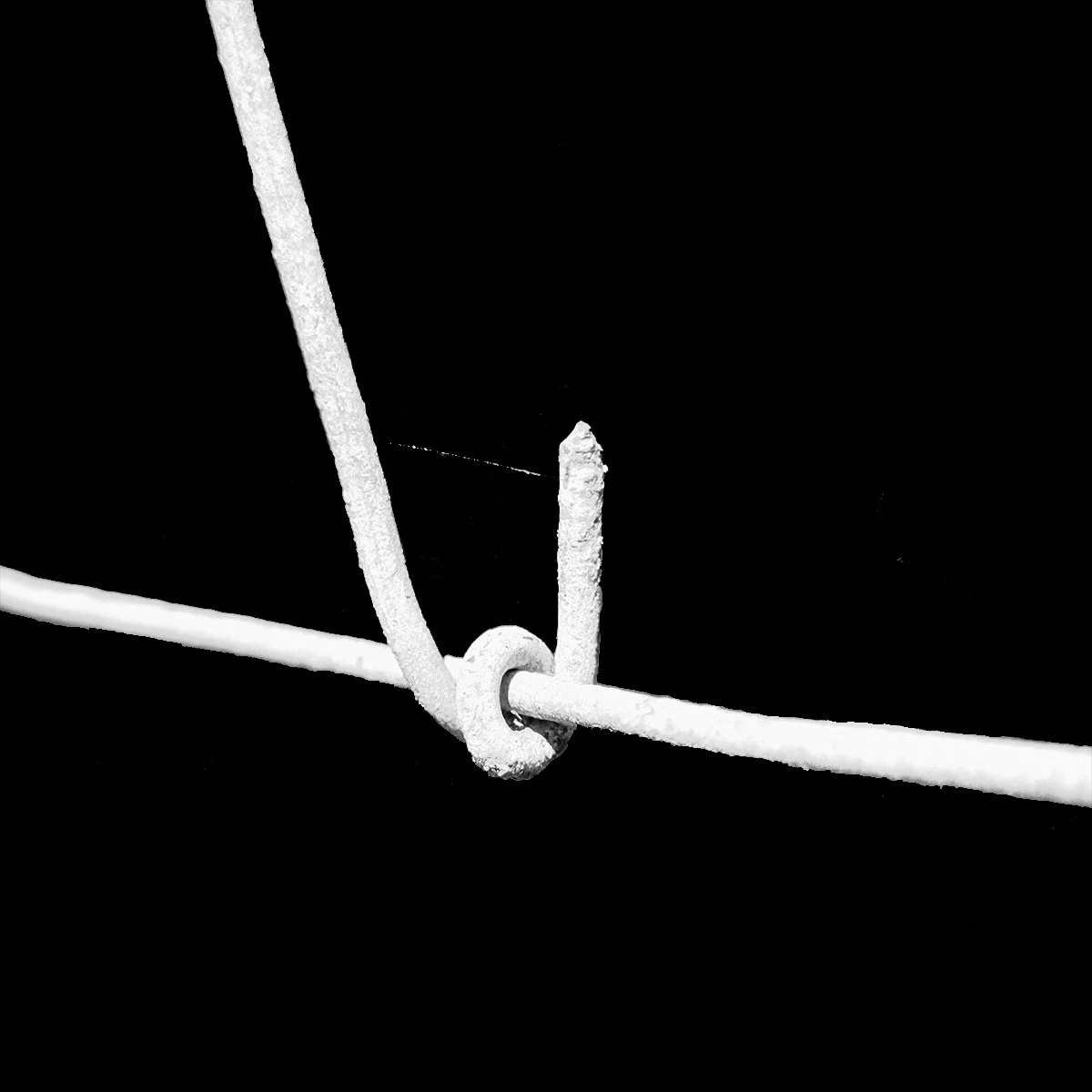
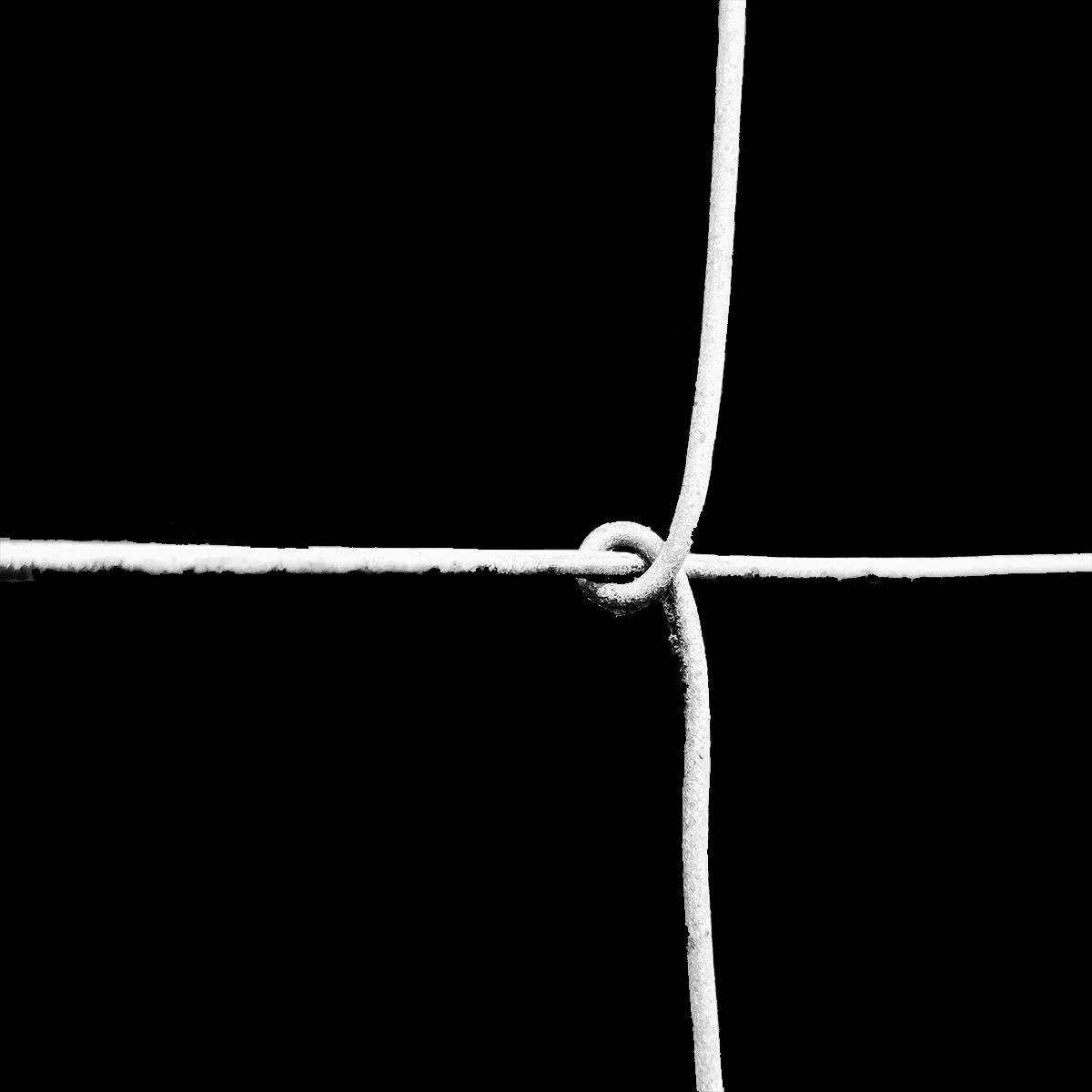
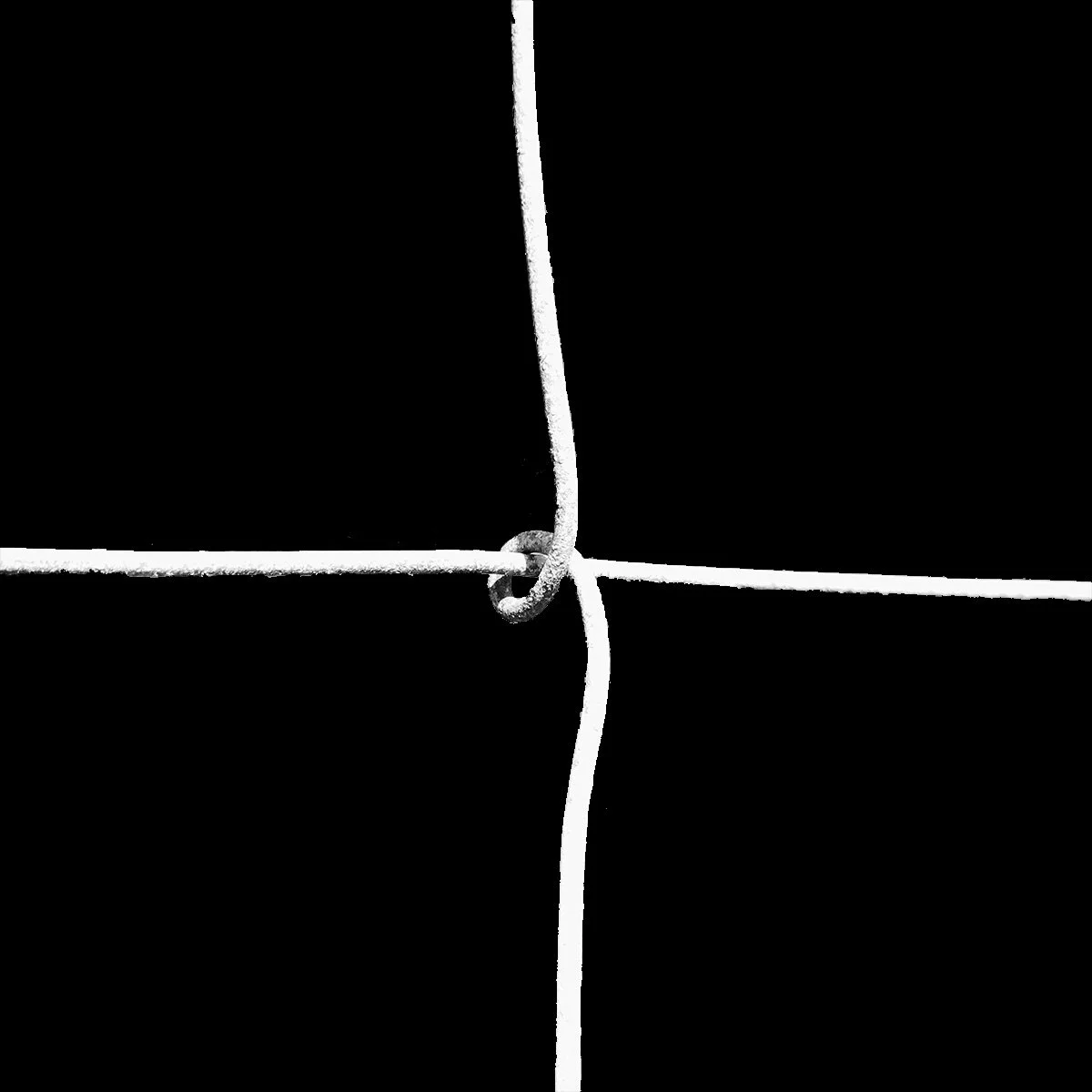
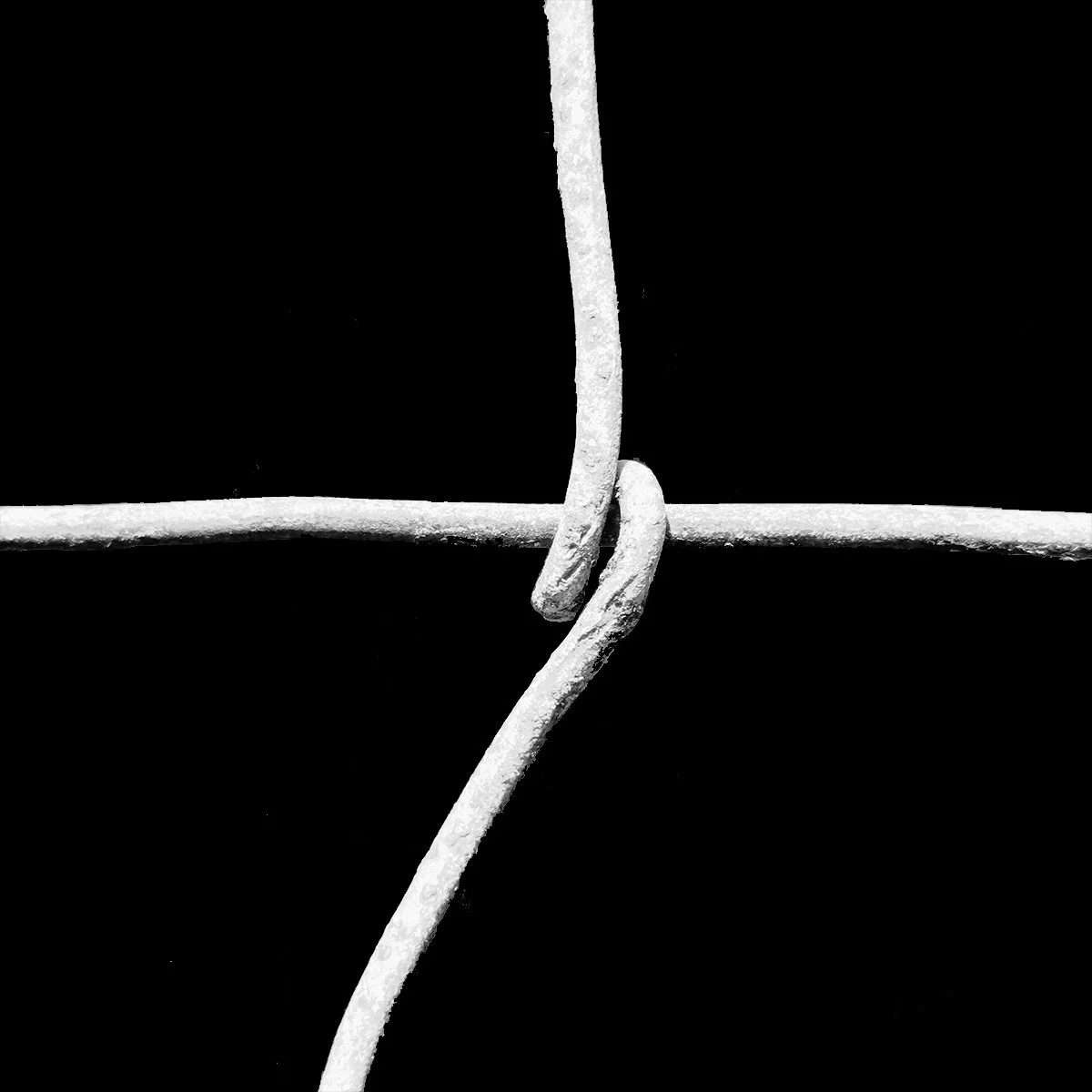
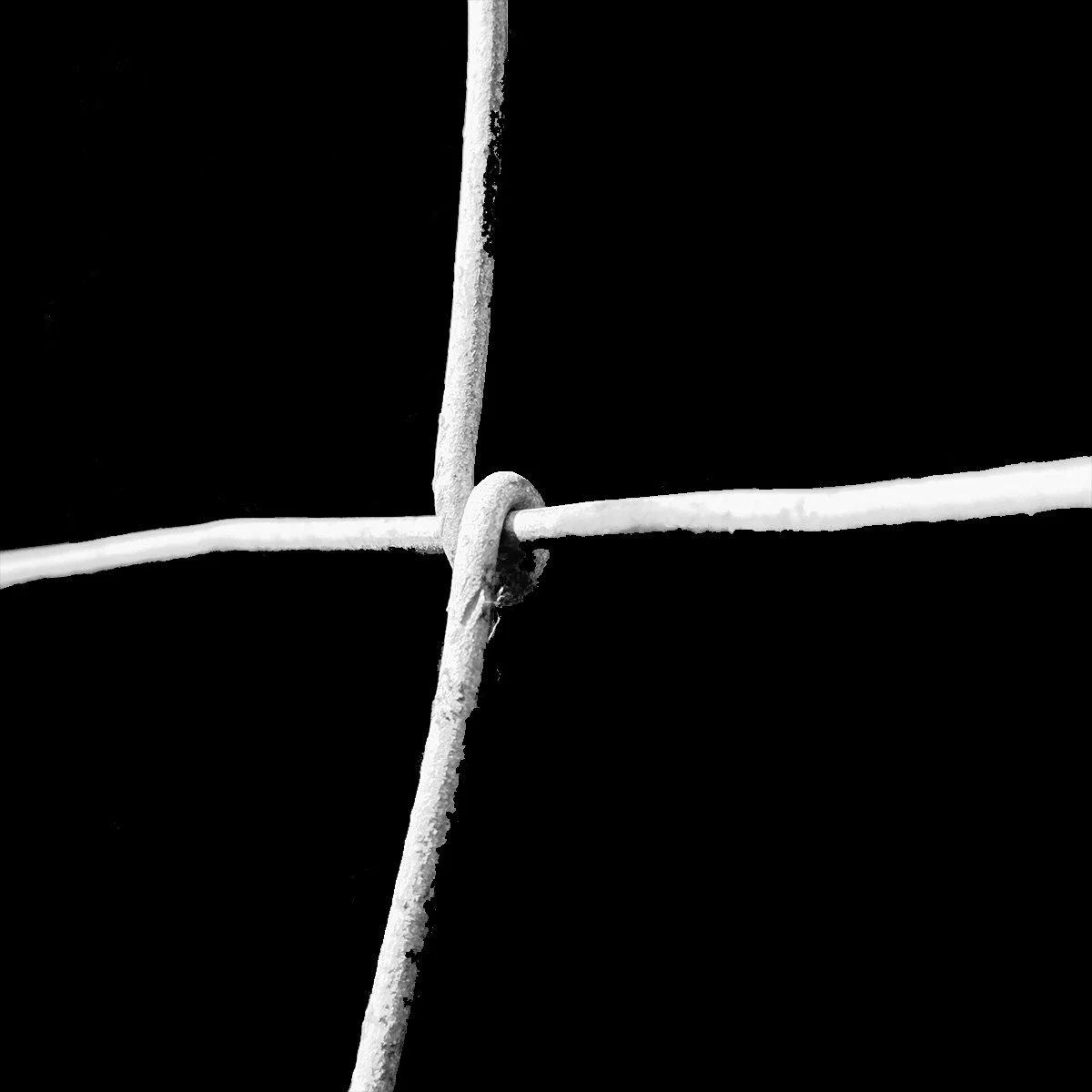
Draad I – a boundary fence on the road to Findhorn
Photography is always an act of translation. Three dimensions become two. The world with all its space and time flattened into a rectangle – or square, in my case. Translation is not about loss, it is about work, skill, creativity and problem solving. How do I compress information that exists in three dimensions so that it reads, clearly and beautifully, in two?
I find the answer in the same place: by slowing down. Stopping. Looking up. Crouching. Walking around the subject, circumambulating it until the non-obvious angle reveals itself. I am not interested in the first view. I am interested in what becomes visible through patience and proximity. I am interested in pattern spotting (like bird spotting?), in rhythms and repetition, and their anomalies. I am interested in the mundane becoming interesting under the loving gaze. Similar to how a cook can transform a few simple ingredients into a dish worthy of respect. Cucina Povera. Arte Povera.
Draad is the Afrikaans word for wire. By extension it is the word for fence – the farm fence, the kind that delineates the landscape of the platteland of South Africa where I grew up. I’m familiar with barbed wire. I have the scar to prove it. There was something in this hinge joint fence that I regularly walk past, that stopped me recently.
What interested me first was compositional. How the placing of the wire — vertical wrapped around the horizontal from either above or below, the vertical wrapped around the horizontal and continuing — divides my square format into three or four. I knew I could clarify this mechanism of using the fence to show the division of my squares with editing. I have been working with erasure for some time – removing skies from architectural photographs. Initially I chose structures with openings in them. By removing the sky, removing the view, and replacing it with a blank background, one ends up looking at the structure rather than through it. And a dark, or near black, background highlights the structure. Whereas using a white background is not that effective, it has a familiarity to it.
Beyond what I expected from the editing, it brought discoveries. It changed the wire’s apparent nature. What is in fact a tough, stiff, weather resistant material began to read as delicate, fragile, ephemeral even. Interesting contrast. The looping, a few gestures of the fencer’s hand, made quickly, functionally, reads as something else at this scale. The curl of a tail? The spiral of seashell? The growth of a Serpulid? How much irregularity there is in the same composition, in each instance of the same principle, the wrapping one wire over another.
These photographs carry something of the sensibility of Giorgio de Chirico's pitturametafisica for me. The principle that an ordinary object, placed in an emptied space and stripped of its familiar context, acquires a hyper-presence that verges on the strange. And something of Giorgio Morandi, who spent decades painting the same bottles on the same shelf, finding in repetition not diminishment but inexhaustible depth. And something too of Aldo Rossi — the architect's understanding that utilitarian structures carry time and memory in their surfaces, that the bones of a landscape are never merely functional.
I love this job. I love being an artist, being a photographer. I am grateful for the technology that makes it possible — that when I come back from a coffee walk, photographs are ready to edit and post. And then the thinking begins: the writing, the looking again, the asking why. The walk, the image, the word. Each one feeding the next.