Draad II - On Erasure
Lately I’ve been leaning into the editing of photos, beyond turning some colour photography into black and white, adjusting settings or applying filters. It started with photos of the Culloden Viaduct, taken in March. The viaduct is a railway bridge across the Nairn river and valley carrying the main line between Inverness and the south. The tall semi-circular arches and its curved shape makes it elegant rather than straight-up functional. Therefore often seen in brochure photos. In these photos the greenery of Scottish landscape does a lot of the work, contrasted with the monumental engineering. I thought it would be interesting to show the bridge from a different angle – below – and remove all reference to landscape and sky. And show the bridge against a dark background. I really enjoyed the results. It reminded me of Giorgio de Chirico’s metaphysical paintings and Aldo Rossi’s neo-rationalism architecture and urban design. Two creatives whose work I’ve long had an affinity for.
I then started looking at what else might look similarly interesting if edited in this way. The sandstone cliffs on the coast at Hopeman. The beacon at Carnac Point in Inverness. Statues. The ruins of Duffus Castle atop its motte. From these large features I switched my attention to the small. The way wires are wrapped around each other in a boundary fence. I often use macro photography for natural elements i.e. plants, pebbles, flowers, the odd spider or butterfly, but I thought this made-element of the wire would work better in the editing, it would morph more easily into abstraction, incongruity and the enigmatic.
What I discovered in realising my instinct with the wire fence is the process of working with different erasers in Photoshop. The work is slow. Often pixel by pixel. Zoomed in until the image fills the screen and what I am looking at is no longer a fence, wire, knot or a barb. I have been here before, as an architect working millimeter by millimeter in AutoCAD. But drawing rather than erasing. There is also some printmaking in the process. Etching particularly. Layering on and off, inversion, mirroring, acid = eraser. The long slow process. An image arriving through removal and subtraction rather than addition. And the big reveal at the end.
Initially with the wire I was simply interested in isolating the wire against a black background. Since I am always looking at how 3D translates to 2D and the composition in 2D I thought the close-ups of the wires are a curious device for dividing the square – my preferred format – of the photograph. The vertical wire wrapping around the horizontal and continuing. Then I noticed that in other instances the vertical terminated at the horizontal, either wrapping from above or below. This changed the composition from being divided into 4 to being divided into 3 while still being symmetrical. Symmetrical, but not exactly because the wires aren’t truly straight and the ties are never the same. The human hand being visible in each tie.
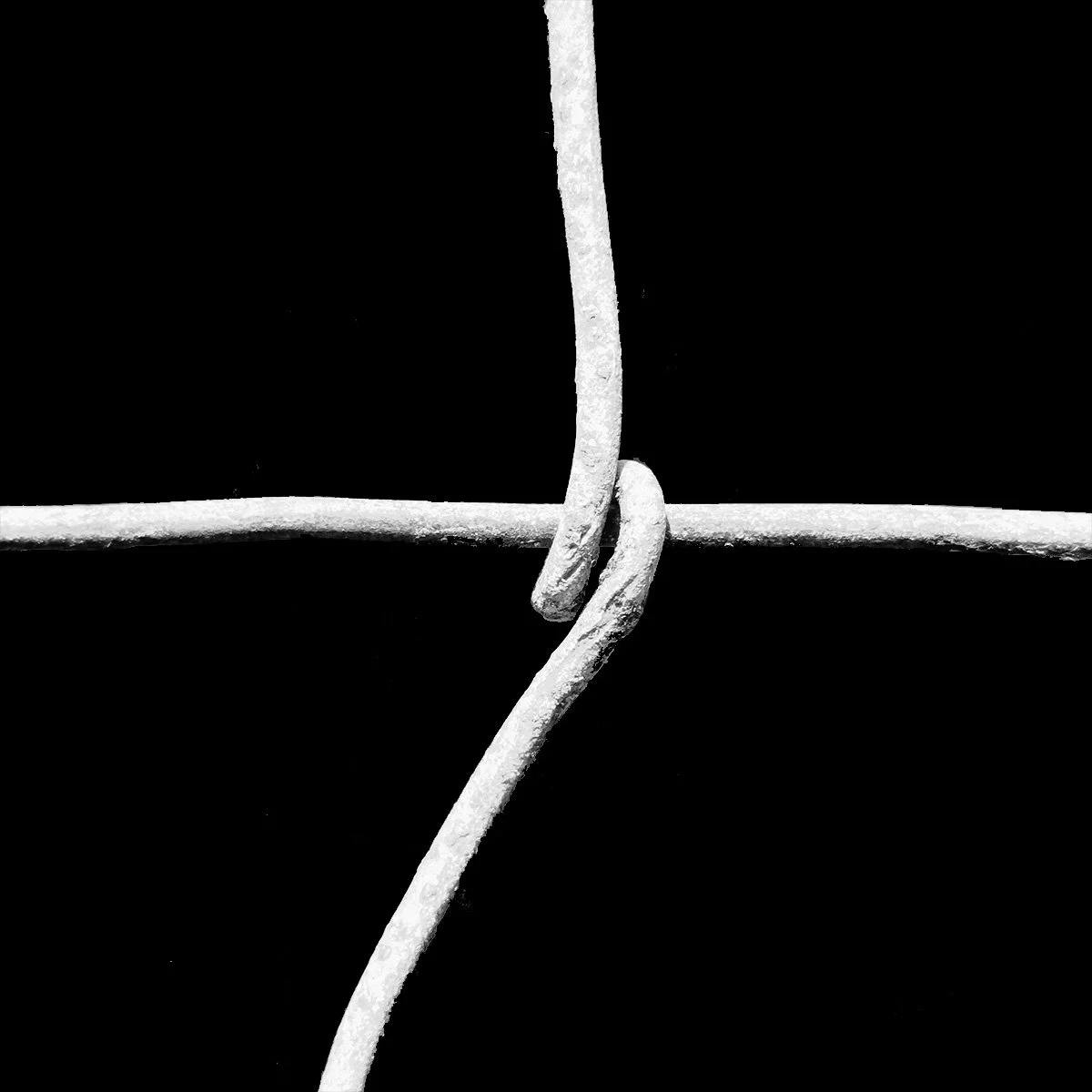
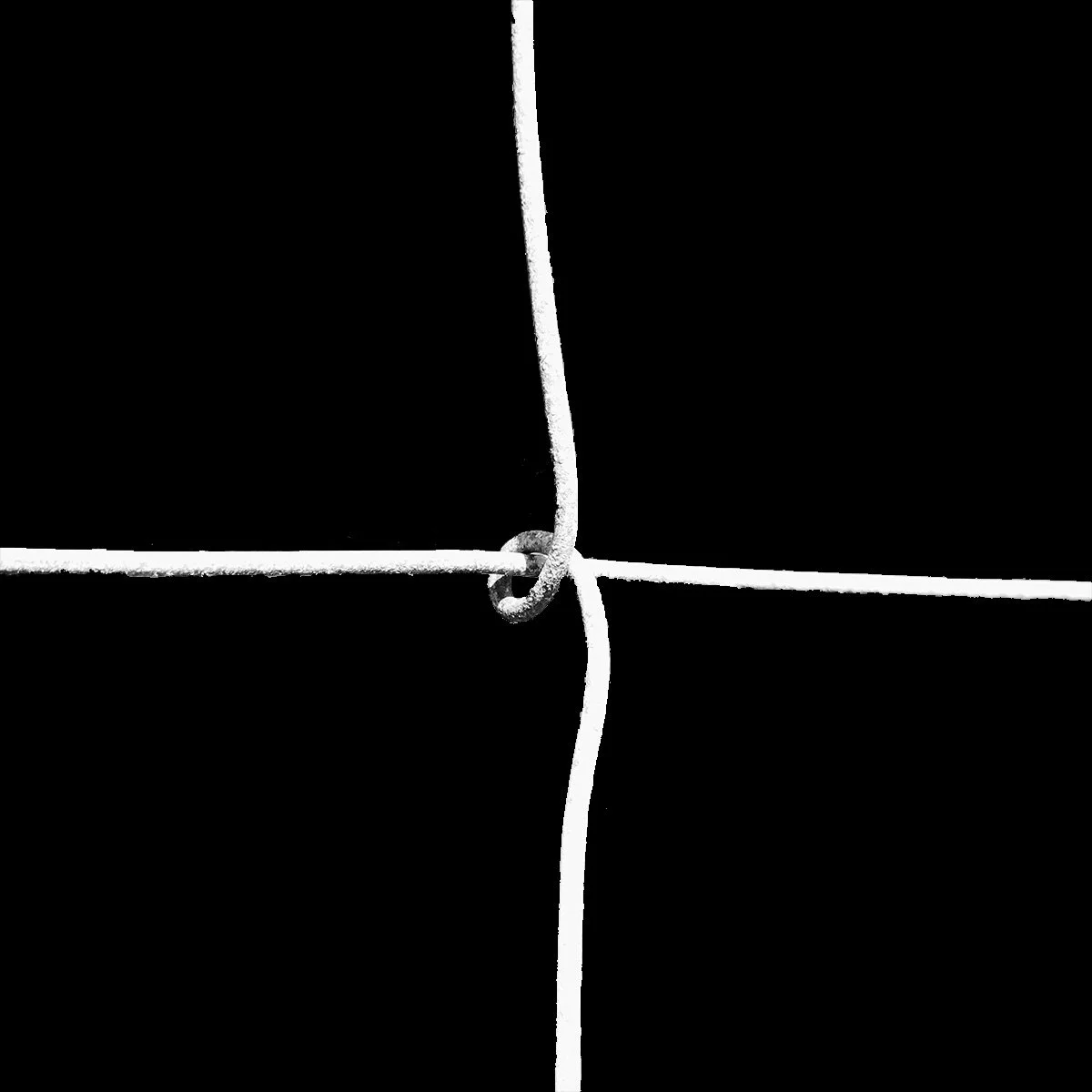
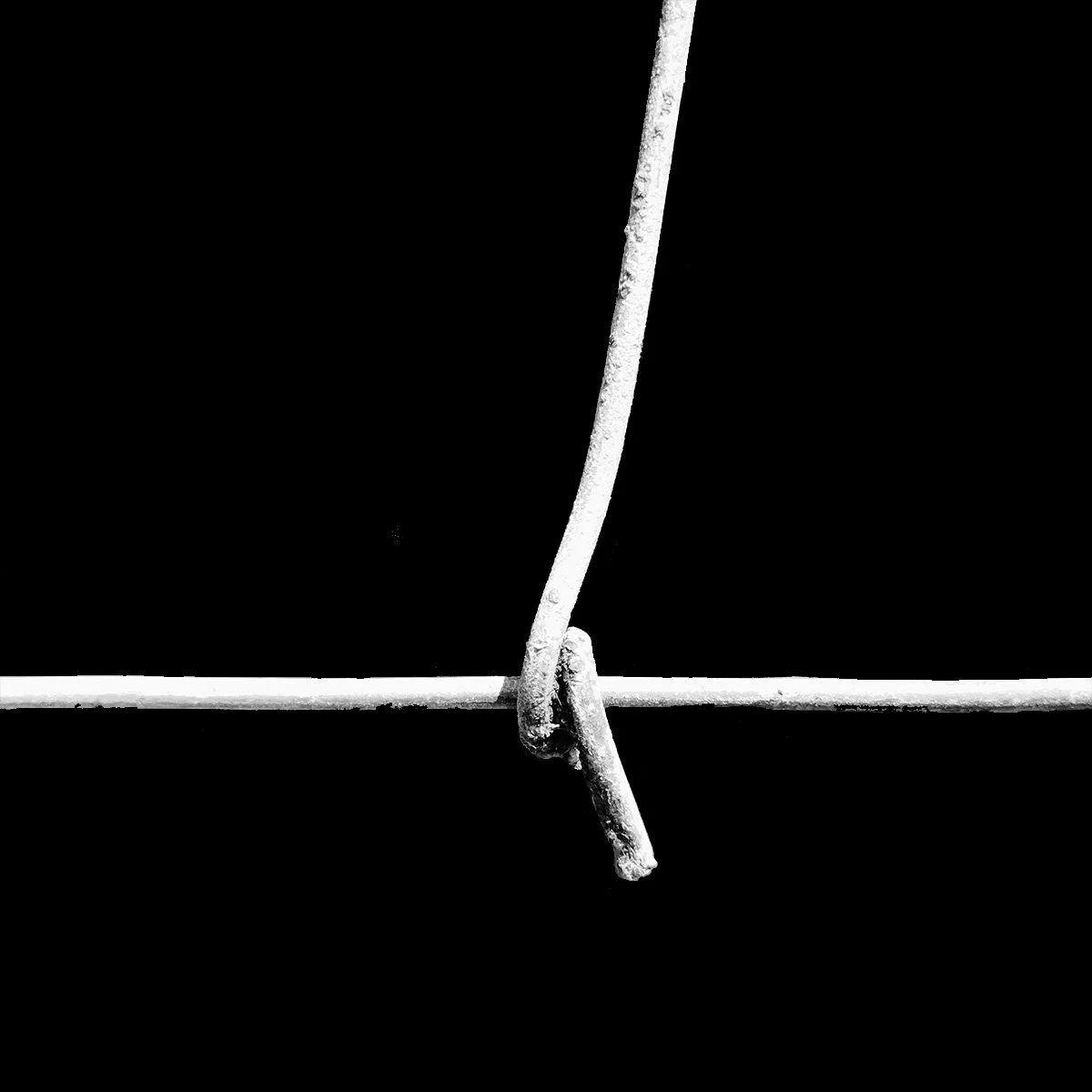
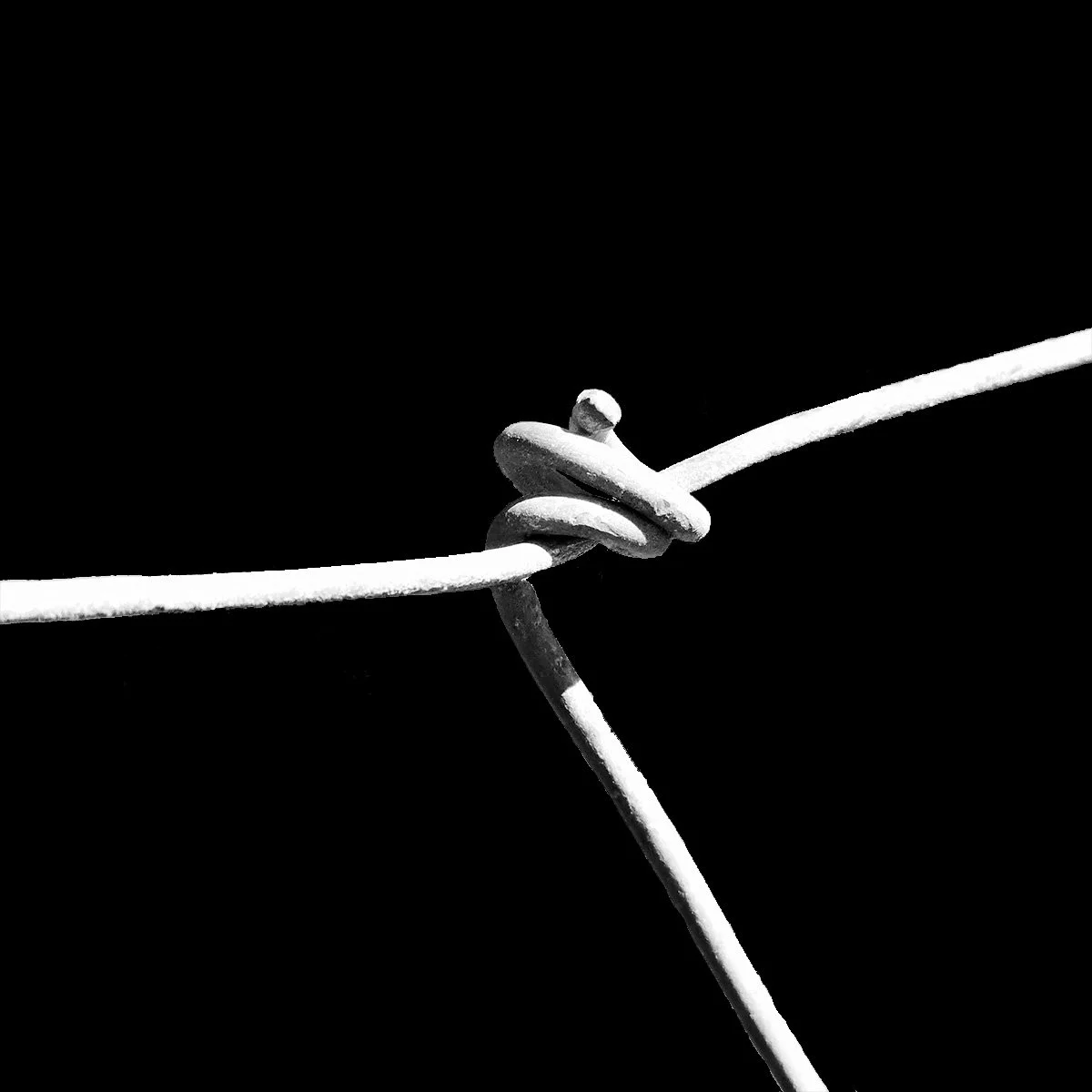
I then lined up a series of different instances of the same tie. And then overlaid all the ties in the series in one image, one can see the variation clearly/keenly. Also the wire curiously becomes something else, a ribbon, delicate.
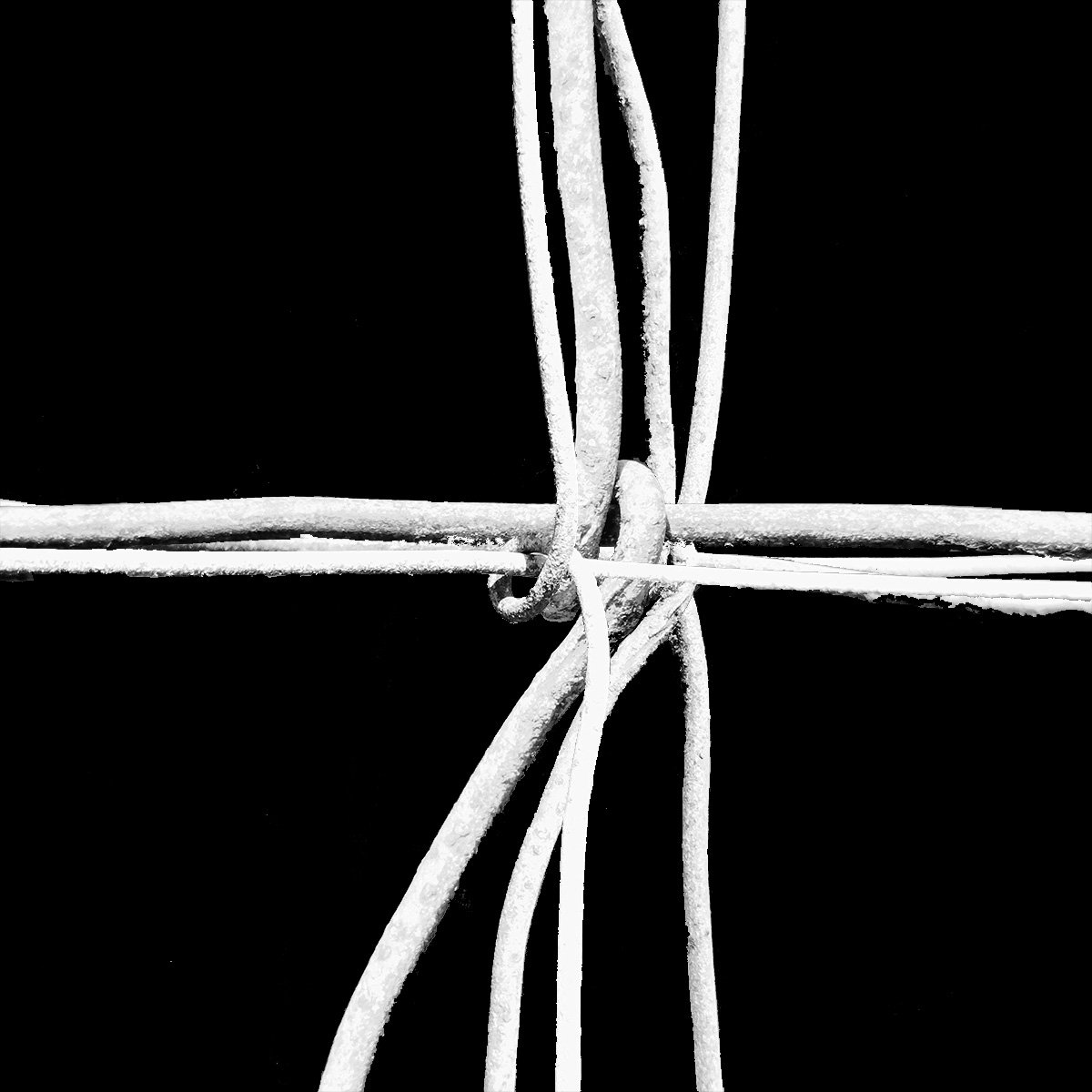
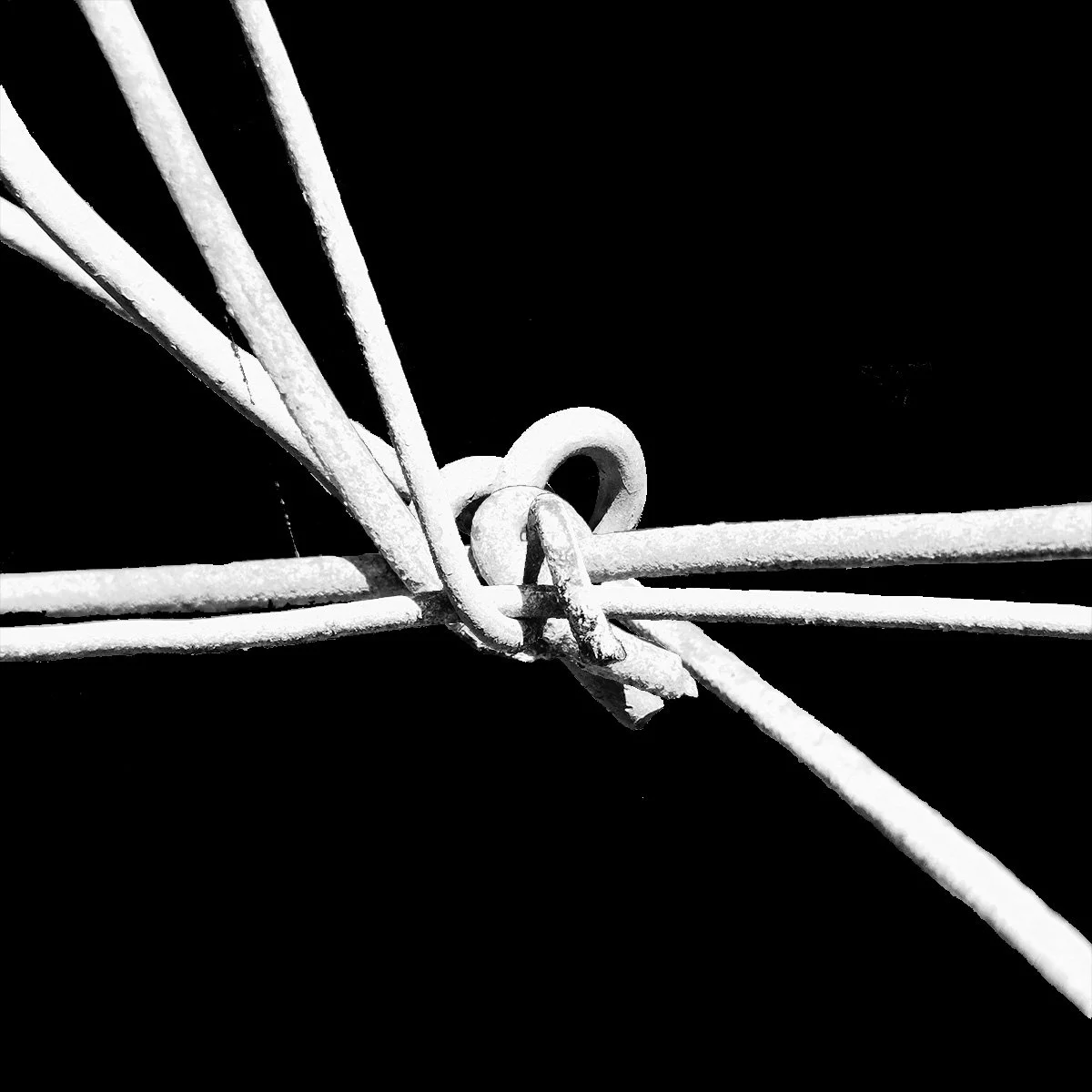
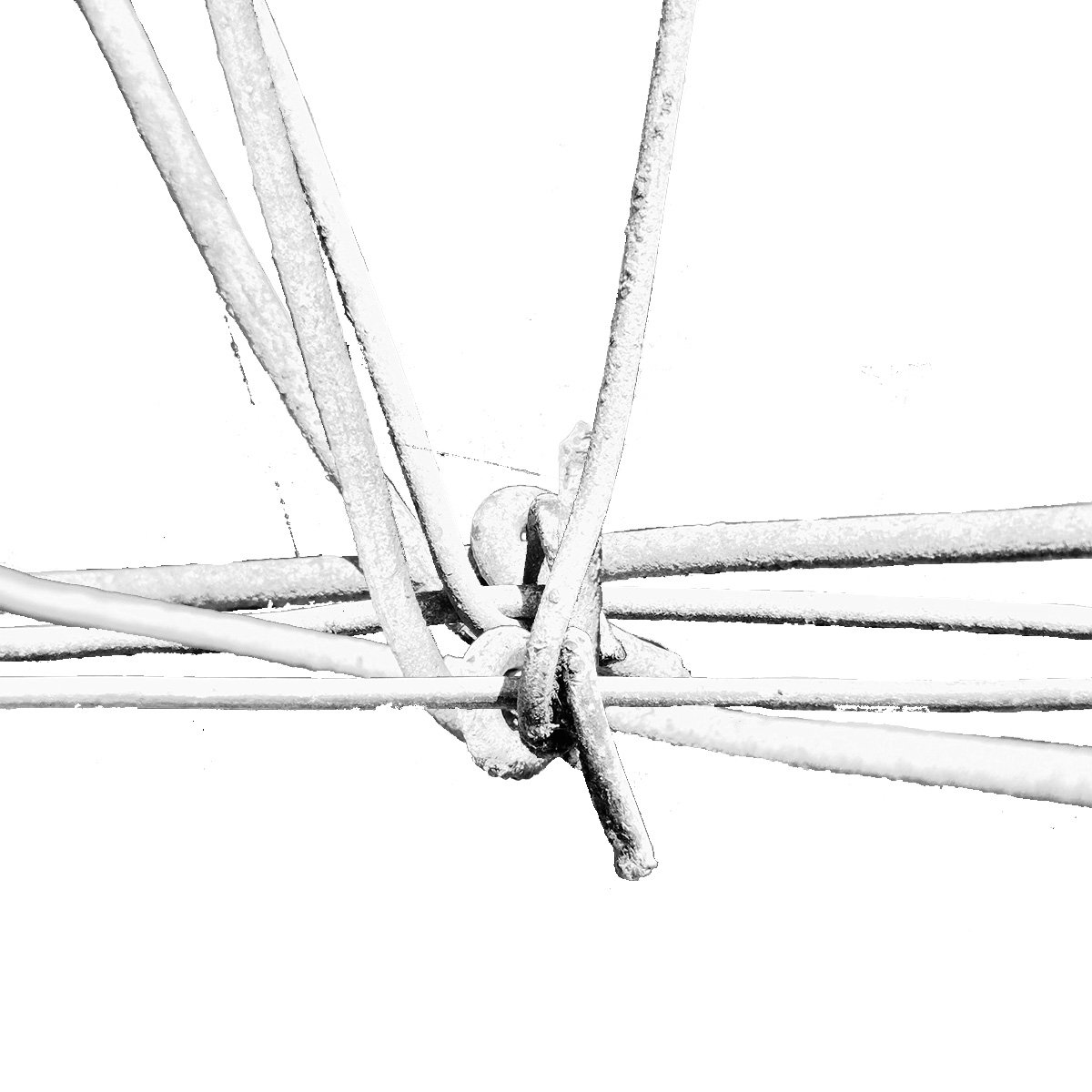
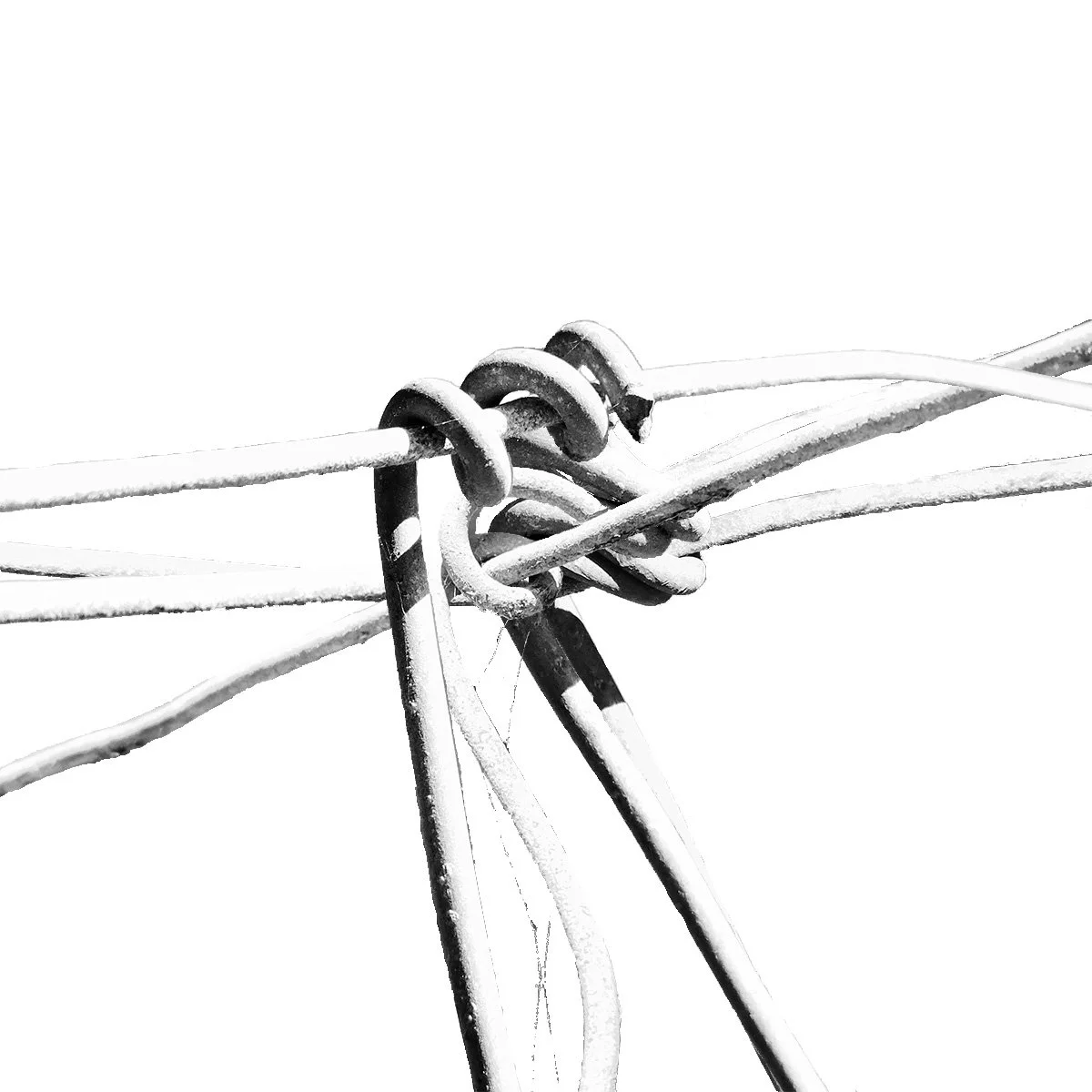
For a brief moment I focused my attention on a piece of barbed wire. The type of fence I am most familiar with. The fence I grew up with. The type that keeps animals in and people out. The type of fence one can climb through but slowly, with great body awareness.
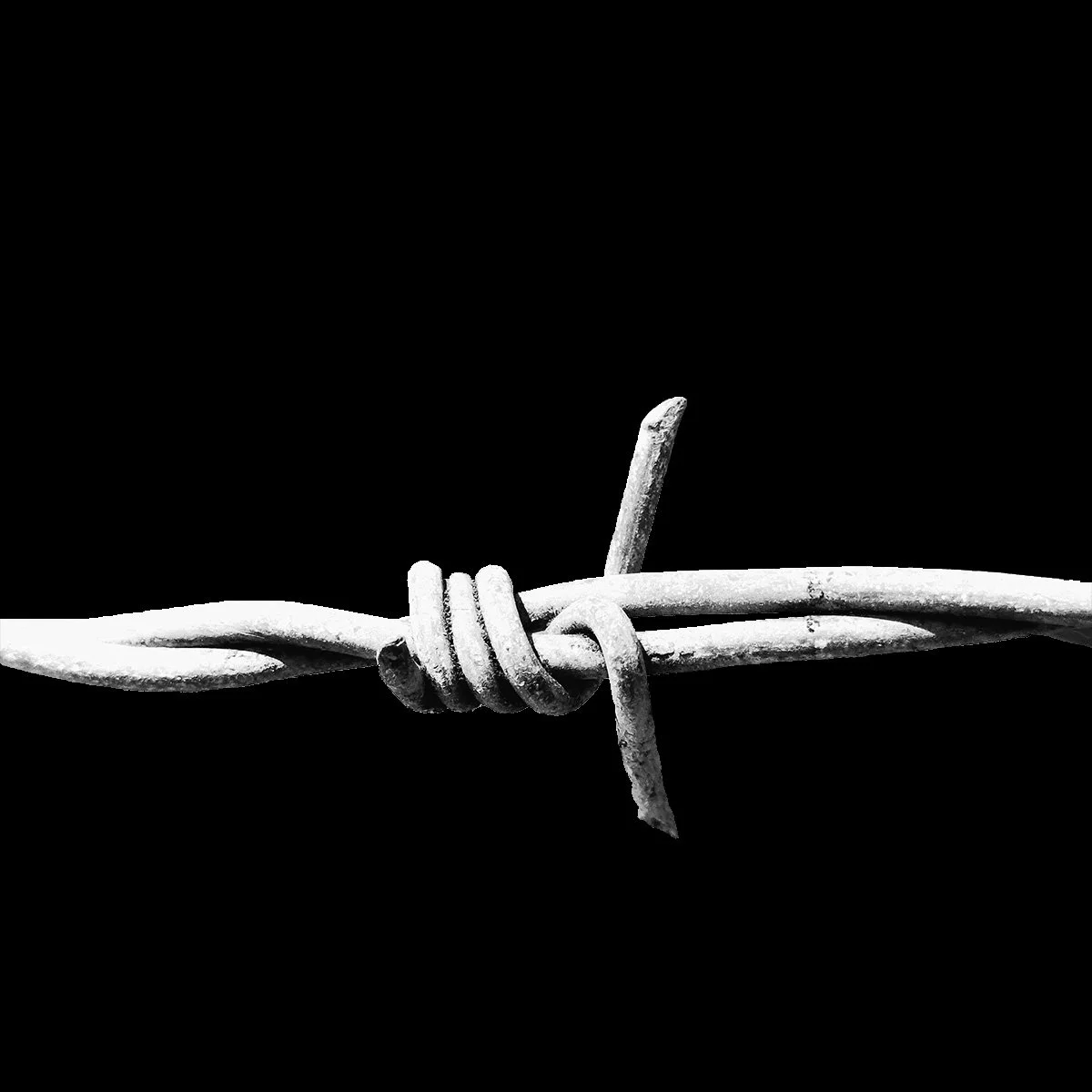
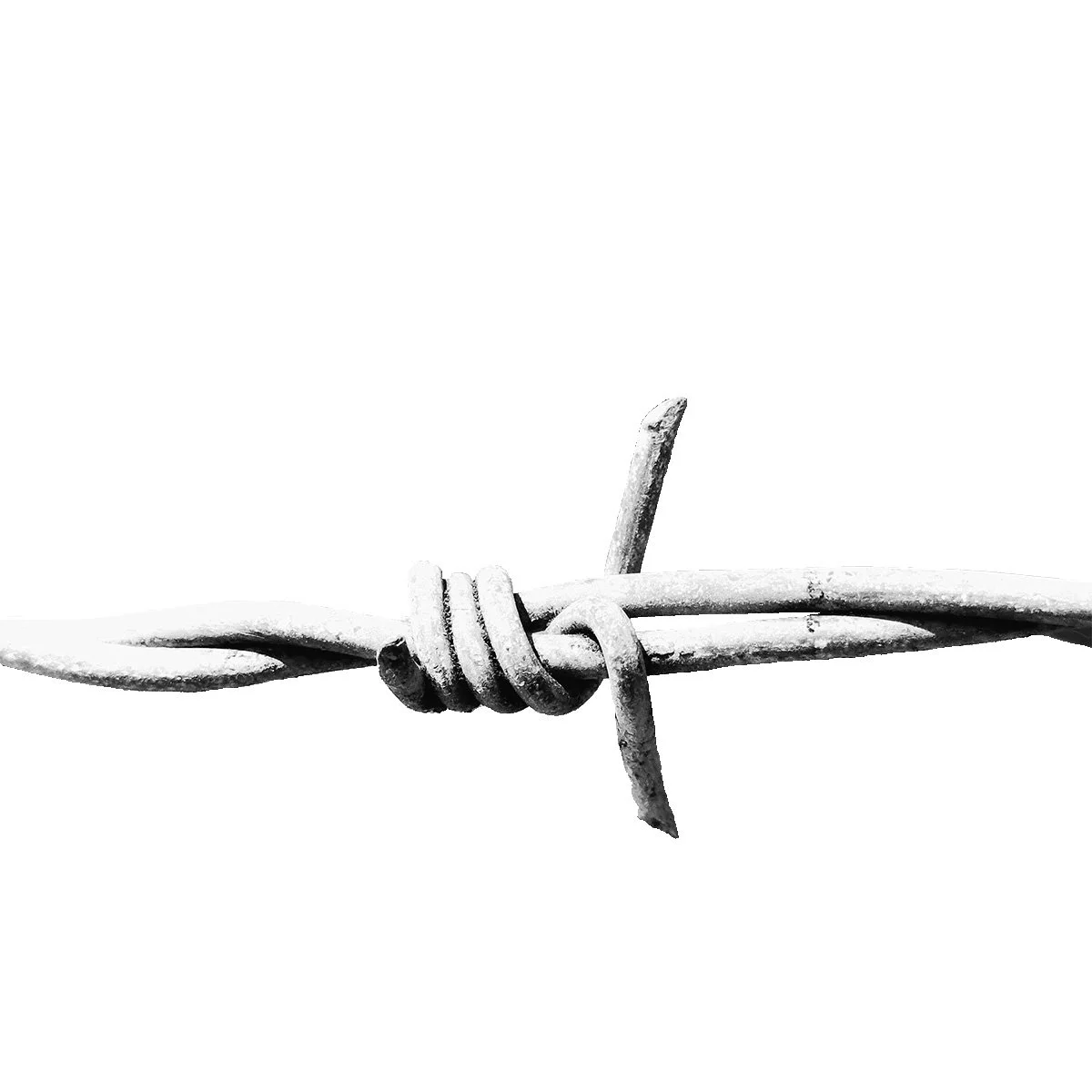
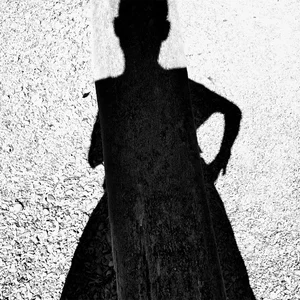
From there I moved on to include the shadow cast by another type of wire fence onto a wooden fence behind. Because I noticed there is an extremely fine line – literally one pixel width – that surrounds wires. On the shadow side this is known as reflected light, bounce light, rim light, edge light. (In academic drawing terms this light is classified as a type shadow.) On the lit side it is called the halation effect, penumbra or, less poetically, the accent line or defining accent. A line of pixels that are neither object nor background. Leaving this line of pixels in the edit is almost definitive. Or perhaps definitive, not almost. The same was true for the shadow cast by the wire. A pixel-width line that was neither shadow nor object on which the shadow landed. On a black background this was the line that gave away the presence of the shadow. On a white background this line is even less perceptible! The shadow is the wire's afterimage. The start of a different investigation, though it began with the same fence.
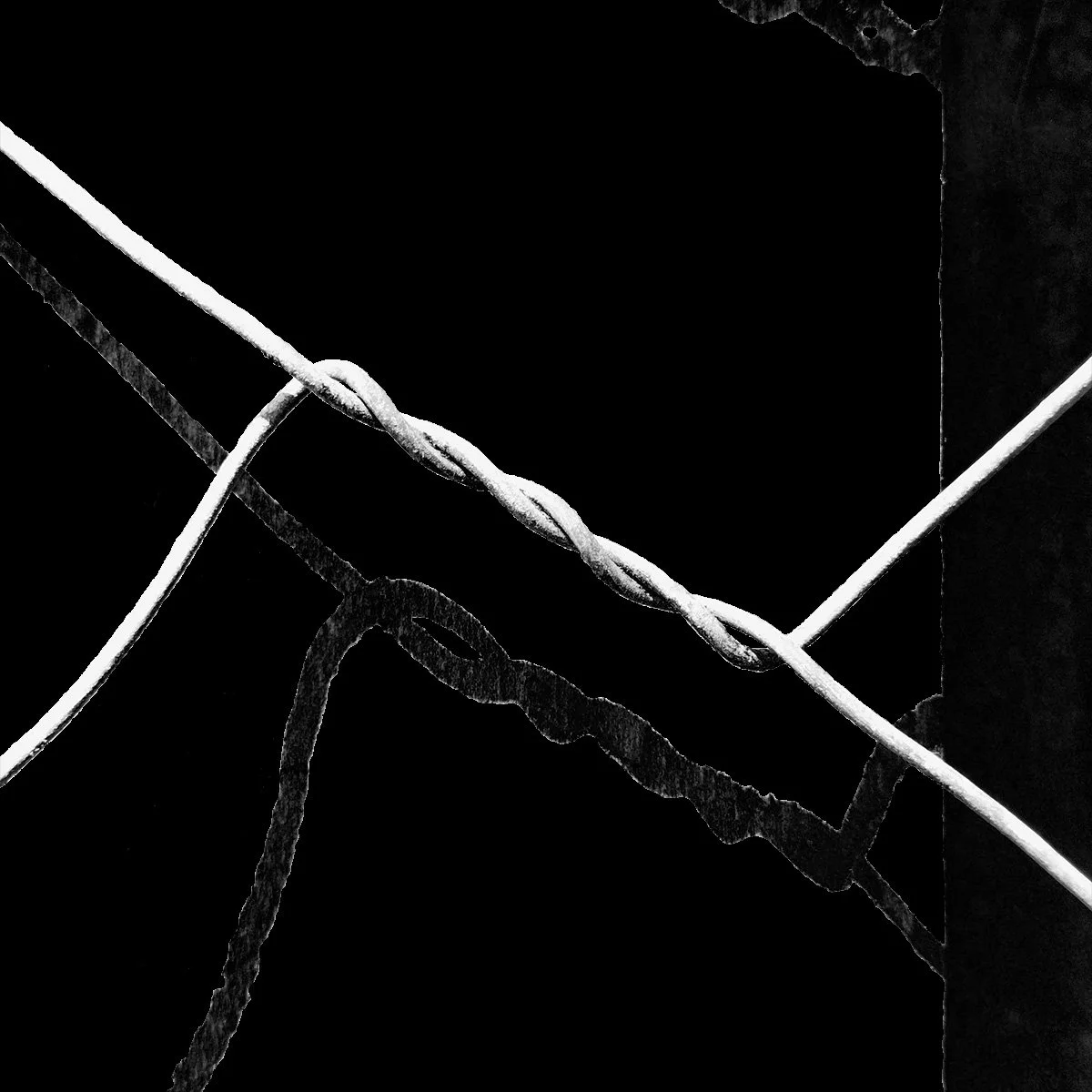
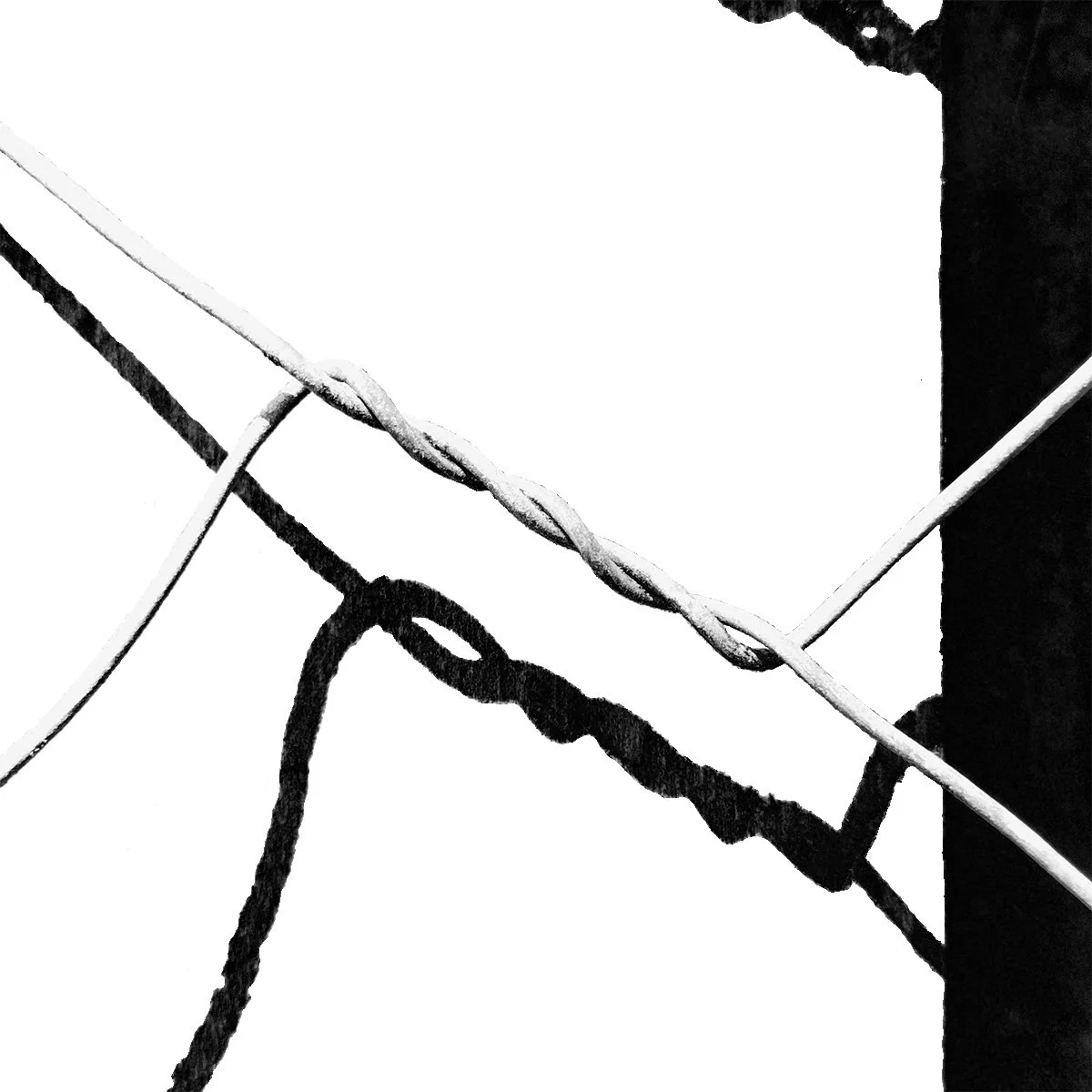
Meticulous work that takes a good playlist and a few hours. And then there is the moment, the big reveal, after the last pixel has been tidied away. The anticipation feels similar to standing at the printing press and peeling the damp paper away from the etched and inked plate. The fear is that I discover an erasure mark, made too far back in the process to recover. Or the composition doesn’t quite work as I imagined. Or it all seems a bit flat, pointless and underwhelming. Or. Or. Or.